
How to identify a phishing email before it’s too late

Every day, thousands of companies are targeted by online scams that begin in a seemingly harmless way: a simple email. In many cases, the message appears legitimate, uses the logo of a well-known company, and requests only a quick action. However, just one click is enough for confidential information to be compromised. Therefore, knowing How to identify a phishing email It has become an indispensable skill for employees, managers, and IT professionals. In addition to preventing financial losses, this knowledge helps protect strategic data and ensures greater business continuity. In this article, you will understand what phishing is, learn about the main warning signs, and discover how to significantly reduce the risks of this type of attack. What is phishing? Phishing is a technique used by criminals to deceive people and obtain confidential information. Typically, the attack occurs through fake emails that mimic communications from banks, suppliers, government agencies, well-known companies, or even colleagues. The objective can vary. In some cases, criminals try to steal passwords and banking data. In others, they seek to install malicious programs on victims’ computers. Furthermore, many attacks aim to capture login credentials for corporate systems or cloud services. Therefore, even a seemingly simple message can represent a significant risk for the company. Why does phishing remain so effective? Although security solutions have evolved considerably, criminals have also refined their strategies. Nowadays, many fraudulent emails have an extremely professional appearance. Furthermore, they use genuine logos, convincing signatures, and well-written text. In some cases, the criminals even research public information on social media to personalize the message and increase the credibility of the scam. As a result, identifying a fake email has become more difficult than it was a few years ago. 8 signs that help identify a phishing email 1. Carefully check the sender’s address. The name displayed in the email may seem correct. However, the email address often reveals the fraud. For example: ✔ financeiro@empresa.com.br ✖ financeiro@empresa-suporte.net Therefore, always check the full address before trusting the message. 2. Be wary of messages that create a sense of urgency. Criminals know that people under pressure make decisions faster. Therefore, they use phrases like: Whenever there is pressure to act quickly, pause and verify the authenticity of the message. 3. Check for spelling and formatting errors. Although many scams are well-crafted, it’s still common to find grammatical errors, automatic translations, words out of context, or strange formatting. In addition, different fonts, misaligned images, and low-quality logos can also indicate an attempt at fraud. 4. Analyze the links before clicking. Never click directly on links sent via email without verifying the destination address. Before taking any action, hover your mouse over the link and check the displayed domain. For example: Text presented: www.seubanco.com.br True destiny: seguranca-login-banco.xyz This way, you can identify many scams even before accessing the page. 5. Never share confidential information via email. Reputable companies rarely ask for this: If you receive such a request, stop the process immediately and confirm the information through official channels. 📌 READ ALSO: Why investing in digital security and antivirus software is essential for any company 6. Be careful with unexpected attachments. Attached files may contain viruses or other malicious programs. Formats that deserve more attention include: However, even PDF files can be used in phishing campaigns. Therefore, only open attachments when you are certain of their origin. 7. Be wary of generic greetings. Messages that begin with expressions such as: They may indicate bulk shipments. Although this doesn’t confirm fraud, it’s worth paying closer attention when other signs are also present. 8. Confirm changes to bank details. A fairly common scam involves sending new bank details for payment to suppliers. In this case, criminals often hack into a legitimate email account or create addresses that are very similar to the real ones. Therefore, before changing any financial information, confirm the request by phone or through another official channel. This way, you significantly reduce the risk of losses. What should you do if you receive a suspicious email? If you receive a message that appears to be phishing, remain calm. Right away: Furthermore, if you have any doubts, contact the company that supposedly sent the email directly. How to protect your company against phishing attacks. Prevention depends on a combination of technology, processes, and employee awareness. Among the main measures are: When these practices are adopted together, the company significantly reduces its exposure to threats. What is the role of the IT team? The IT team plays a key role in preventing attacks. In addition to continuously monitoring the corporate environment, these professionals are responsible for configuring security filters, updating systems, blocking malicious domains, and guiding users on best practices. Similarly, a specialized company can identify vulnerabilities before they are exploited by criminals. Consequently, the organization gains more security, reduces operational risks, and improves its ability to respond to incidents. Conclusion Phishing attacks are becoming increasingly sophisticated. However, most of them can be prevented when employees receive adequate training and the company invests in a consistent information security strategy. More than just installing protection tools, it’s essential to develop a culture of prevention. After all, a single click on a malicious email can compromise strategic information, disrupt operations, and cause financial losses. Therefore, investing in technology, continuous monitoring, and team awareness is one of the smartest decisions any organization can make. If your company wants to strengthen its digital security and reduce the risk of cyberattacks, rely on experts who combine experience, processes, and modern solutions to protect your IT environment. Talk to BHead BHead offers complete solutions in IT support, information security, environment monitoring, infrastructure, and protection against digital threats. Get in touch and discover how we can help your company operate with greater security, availability, and peace of mind. 📱 WhatsApp: (11) 4210-1774
How to set up a professional video conferencing room.
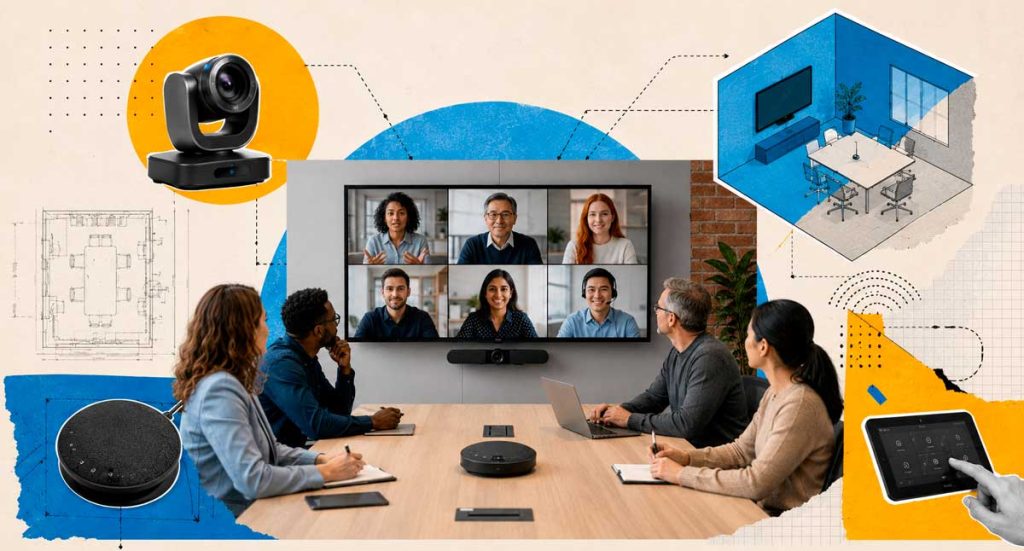
Virtual meetings have become part of the routine for companies. However, many organizations still face problems such as poor audio, low-quality images, connection failures, and difficulties in interaction between in-person and remote participants. Therefore, investing in a professional video conferencing room is no longer a differentiator but a necessity for companies seeking productivity, collaboration, and more efficient communication. In this comprehensive guide, you will understand the main components of a video conferencing room, how to plan the environment, and what precautions to take to ensure high-quality meetings. What is a professional video conferencing room? A professional video conferencing room is an environment designed for conducting virtual meetings with high-quality audio, video, and content sharing. Unlike a meeting held on a regular laptop, a professional meeting room uses specific equipment to provide a more natural and productive experience for all participants. Furthermore, this type of environment allows for the integration of both in-person and remote teams. In this way, hybrid meetings become more efficient and collaborative. Why invest in a video conferencing room? Many companies believe that a webcam and an internet connection are sufficient. However, this approach often leads to problems that directly impact productivity. Furthermore, meetings with technical glitches can convey an unprofessional image to clients, partners, and suppliers. Among the main benefits are: In this way, the company reduces interruptions and makes better use of employees’ time. The main components of a video conferencing room. Professional camera The camera is one of the most important elements in the room. Currently, there are solutions with advanced features, such as: Thus, the experience becomes more dynamic and communication between participants improves. Audio system Poor audio can completely ruin a meeting. Therefore, it is essential to invest in: In many cases, audio has an even greater impact than image quality. After all, a conversation that is difficult to understand compromises the entire meeting. Screen or display The screen size should be compatible with the environment. Some options include: In this way, all participants can clearly view presentations, reports, and other shared content. Video conferencing system The chosen platform must meet the company’s needs. Among the most commonly used are: Furthermore, the integration between hardware and software is essential to ensure a smooth and uninterrupted experience. The importance of acoustics Many companies invest in modern equipment, but ignore the acoustics of the room. However, even the best equipment can perform poorly when installed in unsuitable environments. As a result, problems arise such as: Therefore, it is recommended to use: Consequently, the quality of the meetings improves significantly, and participants are able to communicate more clearly. Lighting: a detail that makes all the difference. Lighting directly influences the quality of the transmitted image. For this reason, it should be considered from the earliest stages of the project. Some good practices include: This way, the participants appear more clearly and the meeting conveys a more professional image. How to plan small, medium, and large rooms. Each environment has specific characteristics. Therefore, the choice of equipment should consider the size of the room and the number of participants. small rooms Suitable for up to 6 people. Recommended: Medium-sized rooms Suitable for 6 to 12 people. Recommended: Large rooms Suitable for more than 12 people. Recommended: In this way, all participants can participate in the meeting comfortably and with quality. Hybrid meetings: the new corporate standard Currently, many companies operate on a hybrid model. In this scenario, the biggest challenge is ensuring that remote participants have the same experience as in-person participants. For this to happen, the room must offer: Consequently, engagement increases and meetings become more productive. Furthermore, remote employees are becoming more actively involved in discussions and decisions. 📌 READ ALSO:Videoconferencing: Transforming Corporate Customer Service Common mistakes when setting up a video conferencing room Many companies make mistakes that jeopardize their investment. The most common ones are: On the other hand, a well-planned project reduces errors and significantly improves the user experience. How can BHead help? Designing a video conferencing room goes far beyond choosing equipment. First of all, it is necessary to carefully assess the company’s environment and needs. Furthermore, each organization has specific challenges that must be considered during the project. That’s why having experts on your side makes all the difference. BHead specializes in the implementation of corporate video conferencing rooms, offering consulting, design, installation, and expert support. In this way, your company can count on more productive, professional, and efficient meetings, regardless of the size of the operation. 💡 Want to transform your corporate meetings? BHead can help your company design a video conferencing room tailored to your needs. Contact us through our WhatsApp: (11) 4210-1774
IT outsourcing for clinics: greater security, stability, and productivity.
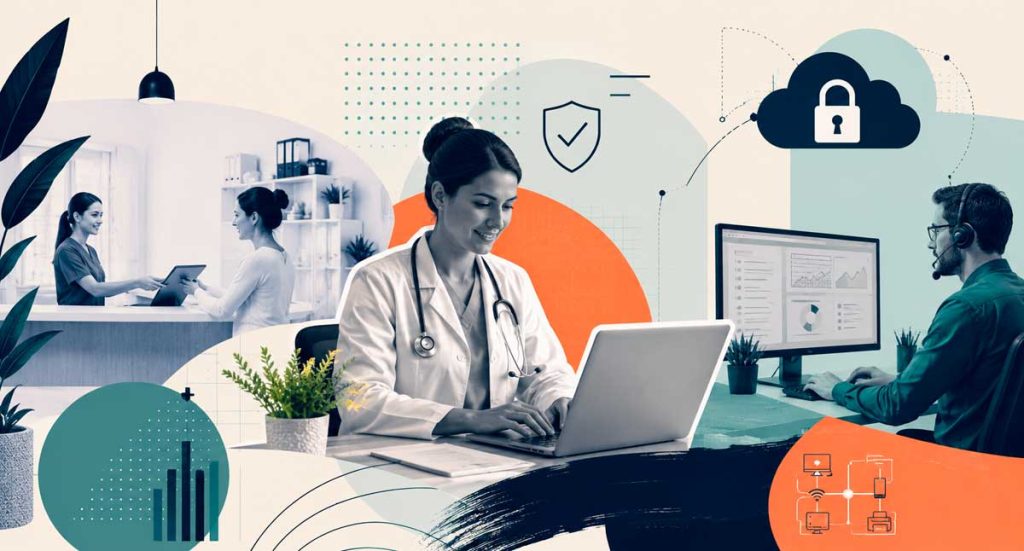
Technology has become indispensable for the operation of medical clinics. Currently, virtually every routine depends on systems, the internet, data storage, and digital communication. When a failure occurs, the impact can directly affect patient care, staff productivity, and the organization of the clinic. Therefore, IT outsourcing for clinics is growing more and more. In addition to reducing technical problems, this model allows for greater stability, security, and operational efficiency. Why is IT so important for medical clinics? Today, clinics use technology in virtually all their daily processes. Among these, we can highlight: In other words, when the infrastructure fails, the entire operation can be compromised. Furthermore, delays and instability directly impact patient experience and staff productivity. Main problems faced by clinics Many clinics still operate without specialized IT support. In many cases, technical assistance is only provided after a problem has already arisen. However, this model often generates several operational risks. Slow systems Slow computers and crashing systems reduce reception productivity and hinder customer service. Consequently, patient waiting times increase and the clinic’s routine becomes more stressful. Internet instability Currently, most medical systems rely on an internet connection. Therefore, connection outages can disrupt: Furthermore, a simple instability can cause delays throughout the workday. Backup failures Many companies believe they have secure backups. However, they only discover problems when they need to recover important files. This is an extremely dangerous risk for clinics and medical offices. Information security risks Clinics handle sensitive patient data daily. Therefore, any security breach can lead to financial losses and problems related to the LGPD (Brazilian General Data Protection Law). Furthermore, cyberattacks have increased in recent years, especially targeting companies that lack adequate protection. How does IT outsourcing work for clinics? IT outsourcing involves hiring a specialized company to manage all of the clinic’s technological infrastructure. In this way, the company takes care of: Meanwhile, the clinic is able to focus entirely on patient care. Benefits of IT outsourcing for clinics Greater operational stability A specialized team can identify flaws before they cause major impacts. Furthermore, continuous monitoring reduces downtime and increases system stability. Cost reduction Maintaining a full in-house IT team can lead to high costs associated with salaries, training, and tools. On the other hand, outsourcing allows access to specialized professionals without the need for large internal investments. Faster technical support When specialized support is available, problems are resolved much more quickly. Consequently, the clinic reduces downtime and avoids operational losses. Data security and compliance with the LGPD (Brazilian General Data Protection Law) Protecting medical information should be a priority in any healthcare institution. Therefore, specialized companies implement: Furthermore, these measures help the clinic comply with the requirements of the LGPD (Brazilian General Data Protection Law). Increased productivity for the team. When the infrastructure functions correctly, doctors, receptionists, and administrators can work more efficiently. In this way, the clinic gains productivity and improves the patient experience. When is the right time to outsource your clinic’s IT? Some signs indicate that the clinic already needs specialized support: In these situations, IT outsourcing can bring immediate gains in organization and stability. The importance of preventative IT in healthcare. Many companies still operate on the “if it breaks, call support” model. However, modern IT acts proactively. In other words, the goal is to identify problems before they affect the operation of the clinic. This is crucial in the healthcare field, where any unavailability can compromise patient care and internal processes. 📌 Read also: IT outsourcing in medical clinics improves security How to choose an IT company for clinics Before hiring a technology company, it’s important to evaluate a few points: Furthermore, choosing a reliable partner makes all the difference in maintaining the operational continuity of the clinic. Technology and customer service need to go hand in hand. Currently, clinics that invest in technological infrastructure are able to offer greater speed, security, and efficiency in their services. Therefore, IT outsourcing has ceased to be merely technical support and has become an important strategy for the growth of medical clinics. 📲 Does your clinic frequently experience IT problems? BHead IT Solutions offers specialized support, preventative monitoring, and IT solutions for companies and institutions that need greater stability, security, and productivity. 💬 Talk to our team via WhatsApp: (11) 4210-1774
IT outsourcing in associations: efficiency and security

Technology management in institutions increasingly demands structure, planning, and specialization. In this scenario, the IT outsourcing in associations It becomes a strategic alternative to ensure operational efficiency, information security, and service continuity. Unlike traditional companies, associations deal with budgetary constraints, high demand, and often critical operations, such as in the healthcare sector. Therefore, the way IT is managed directly impacts the functioning of the institution. The main challenges of IT outsourcing in associations. Associations face a number of specific challenges when it comes to technology. First and foremost, there is a strong reliance on systems for day-to-day operations. Electronic health records, administrative systems, and integrations are essential to keep the operation running. Furthermore, limited financial resources make it difficult to form a complete and specialized in-house team. As a result, many institutions end up operating with a reactive IT infrastructure. Another important point is the need for high availability. Systems cannot stop, as any downtime directly impacts customer service and internal processes. At the same time, information security becomes a constant concern. Sensitive data needs to be protected, especially in compliance with the LGPD (Brazilian General Data Protection Law). Therefore, the combination of these factors requires a well-structured IT system, which is not always possible internally. How does IT outsourcing play a role in this scenario? IT outsourcing allows organizations to have access to specialized technology management without having to maintain the entire infrastructure internally. In this model, a partner company assumes responsibility for IT maintenance, including monitoring, support, security, and infrastructure evolution. Furthermore, the action ceases to be merely corrective. With a preventive approach, problems are identified and resolved before they impact operations. In this way, the association gains more control, stability, and predictability in the technological environment. Benefits of IT outsourcing in associations By adopting outsourcing, associations begin to see significant improvements in their operations. Firstly, there is a considerable reduction in failures. With continuous monitoring, incidents are avoided or resolved more quickly. Furthermore, information security is strengthened. Appropriate policies and technologies help protect sensitive data and ensure compliance. Another important benefit is cost optimization. Instead of maintaining a complex internal structure, the institution gains access to a more efficient and specialized service. At the same time, the internal team can direct its efforts towards strategic activities of the institution itself. Finally, there is a gain in predictability. IT ceases to be a source of instability and begins to act as a support for growth. Real case: Associação Beneficente Nossa Senhora do Pari (HPARI) A practical example of the application of IT outsourcing in associations is the case of the Nossa Senhora do Pari Charitable Association (HPARI). The institution operates in the healthcare sector and has an operation that demands high availability, system integration, and reliable data management. As with many associations in this segment, the complexity of its IT is high. In this context, BHead began to provide complete support for the hospital’s technological infrastructure. The role involves continuous monitoring of the environment, server and network management, information security, and user support. In addition, there is ongoing work to improve and evolve the IT infrastructure. With this approach, HPARI achieved a more stable and secure operation. Failures were reduced, response time improved, and predictability increased. As a result, the institution was able to focus even more on its main objective: serving the population. 📌 READ ALSO: The 7 Biggest Benefits of IT Outsourcing for Associations The importance of preventative IT. One of the main advantages of outsourcing lies in the change of approach. Many associations still operate reactively, meaning they only act after problems have already occurred. However, this model generates instability and high costs. On the other hand, preventative IT allows you to anticipate failures and avoid interruptions. With monitoring and planning, operations become safer and more efficient. Furthermore, this approach brings more control to management and improves the overall performance of the institution. When to consider IT outsourcing Some signs indicate that the association could benefit from outsourcing. Frequent system crashes, slow performance, security flaws, and a lack of planning are clear signs that IT needs to evolve. Furthermore, when the internal team is overworked or lacks sufficient expertise, the outsourced model becomes a viable alternative. Another important factor is the growth of the institution. As operations increase, IT needs to keep pace. Therefore, evaluating these points helps to identify the right time to seek a specialized partner. Technology plays a fundamental role in supporting the operations of associations. When well-structured, it ensures efficiency, security, and continuity of services. If your institution is seeking greater stability, predictability, and security in its IT management, it’s worth rethinking the current model.📲 Talk to BHead by WhatsApp: (11) 4210-1774 and understand how we can help your operation evolve more efficiently and safely.
System crashes: how much does this cost your company?

Taking a few minutes to stop work might seem like a common occurrence in a company’s daily routine. However, when that pause is caused by a system outage, the impact goes far beyond a simple delay. Many companies still treat this type of problem as an isolated incident. However, in practice, recurring outages represent lost productivity, financial losses, and even operational risks. Therefore, understanding the true cost of these interruptions is essential for any manager. Why do system crashes happen? Before discussing losses, it’s important to understand the root of the problem. After all, systems don’t stop working by accident. In most cases, outages are related to failures in the IT infrastructure. Furthermore, a lack of monitoring and preventative maintenance directly contributes to this situation. Among the main reasons, we can highlight: In other words, it’s not a matter of bad luck. In fact, it’s a consequence of an IT department that isn’t prepared to support the operation. 📌 READ ALSO: BHead: who we are and how we help companies evolve with technology The invisible cost of bus stops. At first glance, a 10 or 15 minute stoppage may seem irrelevant. However, when we analyze the real impact, the scenario changes completely. When the system crashes, entire teams are brought to a standstill. Furthermore, even after the system is restored, there is a recovery period before everyone gets back into their normal rhythm. As a result, overall productivity is affected. At the same time, many ongoing activities may be lost. As a result, tasks need to be redone, which generates rework and increases the team’s effort. Furthermore, customer service is also directly impacted. If the system is down, response time increases and the customer experience is impaired. Consequently, this can lead to dissatisfaction and even lost opportunities. On the other hand, companies that rely on billing systems can suffer immediate losses. In other words, every minute of downtime can represent lost money. The cumulative effect over time Even a single fall can have an impact. However, the real problem lies in its recurrence. When these interruptions happen several times a month, the damage becomes significant. Furthermore, team burnout increases and the work environment becomes more stressful. Over time, the efficiency of the operation decreases. Therefore, what seemed like a small problem begins to affect the overall performance of the company. How to calculate the real impact on your company. Although many companies don’t do this calculation, it’s simpler than it seems. First, consider how many people are impacted by the outage, how long the system is unavailable, and the average hourly cost per employee. With this data, it’s already possible to have an initial estimate of the losses. Furthermore, it’s important to consider factors such as lost sales, rework, and impact on customer service. In this way, the manager begins to see IT as a strategic element, and not just as a cost. What can be done to prevent system crashes? The good news is that this type of problem can be avoided with proper planning. With continuous monitoring, for example, it is possible to identify failures before they cause an impact. Thus, the action ceases to be reactive and becomes preventive. Furthermore, investing in adequate infrastructure is fundamental. Systems need a solid foundation to function correctly, especially in high-demand environments. Another important point is the constant updating of systems. Outdated environments are more vulnerable and therefore more prone to failures. Similarly, information security should be treated as a priority. After all, attacks and security breaches can also cause downtime. Finally, capacity planning ensures that IT keeps pace with the company’s growth, preventing overloads and instability. The difference between solving and preventing Many companies still operate reactively, meaning they only address the problem after it has already occurred. On the other hand, companies that adopt a preventative approach are able to avoid most failures. Furthermore, they gain greater stability, predictability, and operational efficiency. Therefore, the difference lies not only in the technology used, but in how IT is managed. When to seek expert help In many cases, the internal team is unable to handle all the demands. This happens mainly due to a lack of time or specialization. In this scenario, having a specialized partner allows for continuous monitoring of the environment, rapid response to incidents, and better structuring of IT management. Furthermore, the company gains a more strategic view of technology, reducing errors and improving operational performance. If your company is already experiencing system outages or wants to avoid this type of problem, it’s worth rethinking how your IT is being managed. 📲 Talk to BHead on WhatsApp: (11) 4210-1774 and understand how we can help your operation achieve greater stability, security, and efficiency.
IT Outsourcing in Healthcare: Why Your Institution Needs It
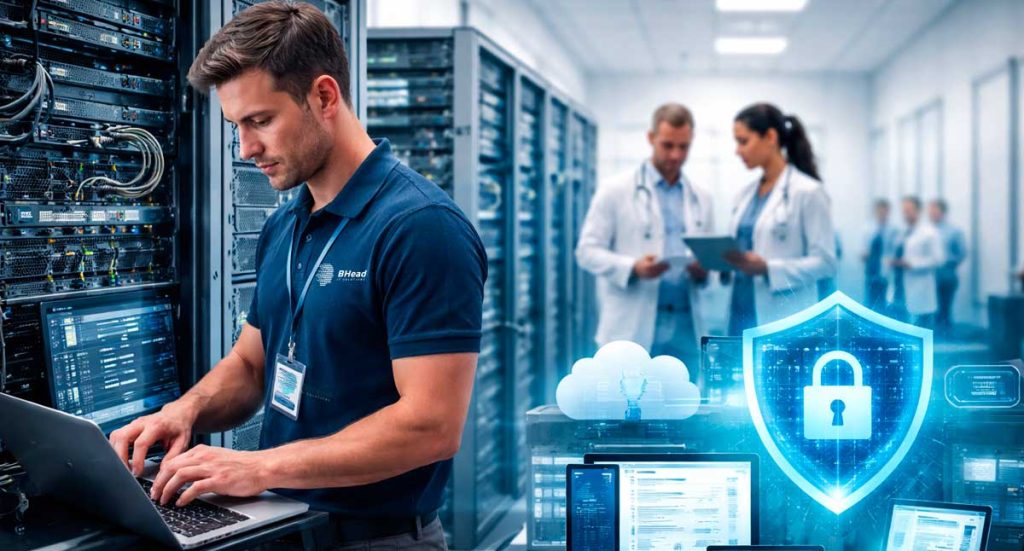
Technology has become an essential pillar in the healthcare field. However, maintaining an efficient, secure, and 24/7 available IT infrastructure is a major challenge for hospitals, clinics, and laboratories. In this scenario, the IT outsourcing in healthcare It emerges as a strategic solution to guarantee performance, safety, and operational continuity. Throughout this article, you will understand how this model works, what its benefits are, and why more and more healthcare institutions are adopting this approach. What is IT outsourcing in healthcare? IT outsourcing in healthcare consists of outsourcing of information technology services For a specialized company. Instead of maintaining a complete in-house team, the institution relies on a strategic partner to manage, monitor, and evolve its entire technological infrastructure. Furthermore, this model allows access to specialized professionals, up-to-date technologies, and best market practices, without the need for high internal investments. Why is IT so critical in the healthcare sector? The healthcare sector has characteristics that make IT even more sensitive and strategic. First, systems need to be available at all times. Any downtime can directly impact patient care. Furthermore, there is a large volume of sensitive data that requires rigorous protection. Among the main critical points, we can highlight: Therefore, IT failures in this environment are not only operational, but can also jeopardize the reputation and even the safety of patients. Key IT challenges in healthcare institutions Even while acknowledging the importance of technology, many institutions face challenges in maintaining efficient IT infrastructure. Lack of specialized team Professionals with specialized knowledge in both healthcare and technology are hard to find. As a result, IT management ends up being limited. Outdated infrastructure Outdated systems and equipment hinder technological evolution and increase the risk of failures. High demand for availability Hospitals and clinics cannot shut down. However, maintaining systems active 24 hours a day requires constant infrastructure and monitoring. Security and compliance risks With the LGPD (Brazilian General Data Protection Law) in effect, protecting sensitive data has become an obligation. Even so, many institutions lack adequate processes. Benefits of IT outsourcing in healthcare Faced with these challenges, outsourcing presents itself as an efficient and strategic solution. Reduction of operational costs Instead of maintaining a full in-house team, the institution now relies on a specialized, on-demand service. This allows for better financial control. Access to experts With outsourcing, the company gains access to qualified professionals with experience in different scenarios and technologies. Continuous monitoring An outsourced IT company acts proactively, identifying and correcting problems before they impact operations. Enhanced information security Specialized companies adopt best practices and advanced technologies to protect sensitive data and ensure compliance with the LGPD (Brazilian General Data Protection Law). Focus on core business While IT is managed by specialists, the institution can focus on what really matters: patient care. 📌 READ ALSO: IT outsourcing for hospitals: 5 signs that your hospital needs this solution. How to implement IT outsourcing in healthcare. To achieve good results, it is essential to follow a structured process. Assessment of the current situation First of all, it’s necessary to understand the IT situation. This includes infrastructure, systems, security, and processes. Defining objectives Each institution has specific needs. Therefore, it is important to define clear goals, such as performance improvement, cost reduction, or increased security. Choosing the ideal partner Not every IT company has experience in the healthcare sector. That’s why choosing a partner with expertise in this segment makes all the difference. Implementation and monitoring After hiring, the process should be closely monitored. This ensures that the objectives are being met. The strategic role of IT in the evolution of healthcare. Technology is no longer just an operational support. On the contrary, it has become a strategic element for innovation and growth. With the advancement of solutions such as electronic health records, telemedicine, and data integration, IT has come to directly influence the quality of care and the efficiency of institutions. Therefore, investing in a well-structured IT system is investing in the organization’s future. Count on BHead to transform your institution’s IT. BHead acts as a strategic partner to healthcare institutions, offering complete IT outsourcing solutions, focusing on security, performance, and operational continuity. Our team is prepared to understand the needs of your environment and deliver a robust, efficient technological infrastructure ready to grow alongside your business. If you are looking for more efficiency, security and peace of mind in IT management, talk to BHead and find out how we can help.
How network outages directly impact business productivity.
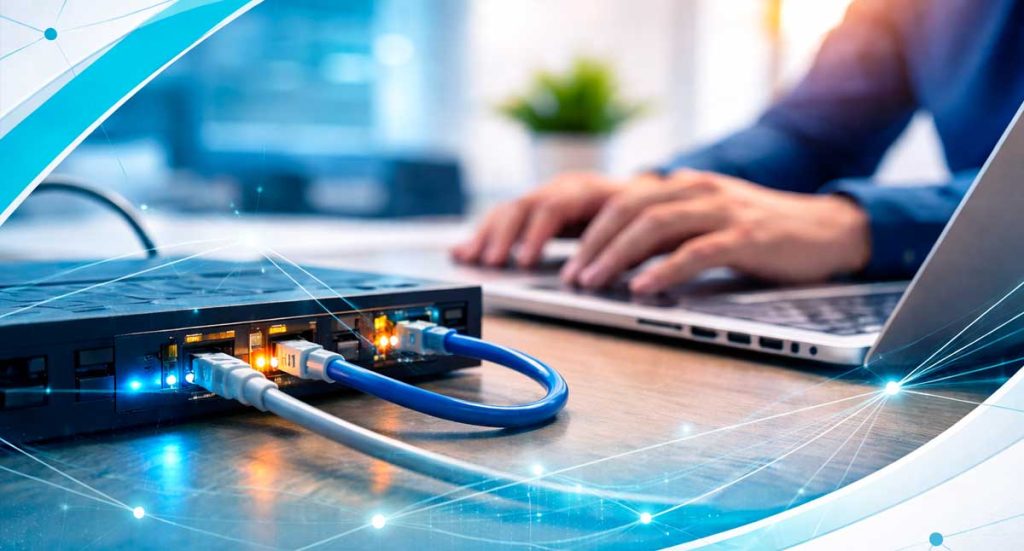
Network infrastructure is one of the cornerstones of any modern company’s operation. Currently, virtually all corporate processes depend on systems, digital communication, and constant access to data. However, many organizations still underestimate the impact that network failures can have on team productivity. When a corporate network experiences instability, even minor issues, the result is usually lost time, process delays, and employee frustration. Consequently, the company’s operational efficiency is directly affected. Why is the corporate network so important for businesses? Today, most business activities depend on connectivity. Management systems, communication platforms, cloud storage, and collaborative tools require constant and stable network access. Therefore, any interruption can generate chain reactions. For example, when the network becomes slow or unstable, simple tasks take much longer to complete. Furthermore, employees end up frequently interrupting their work to try and resolve technical problems. Over time, these small delays accumulate and have a significant impact on productivity. The main problems caused by network failures. Network failures can occur for various reasons, such as inadequate infrastructure, outdated equipment, or lack of continuous monitoring. Regardless of the cause, the effects tend to be similar. Among the most common problems are: Furthermore, when the network experiences frequent instability, IT departments end up spending a significant amount of time resolving emergency problems instead of working on structural improvements. 📌 READ ALSO:BHead: How computer network management impacts business performance. The impact of network outages on productivity. When network infrastructure is not properly planned, the company begins to face productivity losses that are often not immediately apparent. For example, imagine a team of ten employees who experience only five minutes of system slowdown throughout the day. While that may seem like a small amount, by the end of the week the lost time becomes significant. Furthermore, network problems can directly affect customer service, delay deliveries, and compromise the efficiency of internal processes. For this reason, many companies have come to see network infrastructure as a strategic factor in business performance. The importance of monitoring and managing network infrastructure. An efficient corporate network depends not only on modern equipment. In fact, it requires planning, constant monitoring, and proper management of the IT infrastructure. With proper monitoring, it’s possible to identify problems before they even impact users. This allows the IT team to act proactively, preventing interruptions and ensuring greater operational stability. Companies that have a structured technology management system, such as that offered by BHead IT Solutions They are able to reduce failures and keep their network environments running in a more stable and secure manner. Network infrastructure plays a fundamental role in business performance. When well-planned and monitored, it contributes to more efficient and productive operations. On the other hand, frequent failures can lead to delays, rework, and financial impacts. Therefore, investing in the proper management of the corporate network is no longer just a technical issue, but a strategic decision for companies that want to grow sustainably.
BHead explains: why strategic IT management is essential for modern businesses.
A BHead IT Solutions, also known as BHead observes daily how technology has ceased to be merely operational support and has become a central element of business strategy. Currently, companies that treat IT as a strategic area are able to operate with greater efficiency, security, and predictability. However, it is still common to find organizations that view technology only as a cost. In this scenario, the lack of planning ends up generating rework, operational failures, and unnecessary risks. What is strategic IT management? Strategic IT management goes beyond the maintenance of computers and servers. In practice, it involves planning, continuous monitoring, failure prevention, and aligning the technological infrastructure with business objectives. Furthermore, a well-structured management system allows for anticipating risks and optimizing investments. Consequently, the company reduces hidden costs and improves its growth capacity. Why does IT need to be aligned with the company’s strategy? First and foremost, every modern company depends on systems, networks, and data. Therefore, any technological instability can directly impact productivity and revenue. On the other hand, when IT is strategically planned, the organization gains: Thus, technology ceases to be reactive and becomes preventive. 📌 Read also:The 7 Biggest Benefits of IT Outsourcing for Associations The impact of strategic IT management on operational efficiency. When infrastructure is continuously monitored, problems are identified before they become critical. This prevents team downtime and data loss. Furthermore, automated processes reduce human error. As a result, the company gains agility and increases its competitiveness in the market. BHead emphasizes that technological efficiency doesn’t just mean speed. On the contrary, it means stability, security, and predictability. 📌 Read also:Network technology and IT management increase efficiency in civil construction. Information security as a strategic pillar Currently, cyberattacks and data breaches pose real risks to companies of all sizes. Therefore, strategic IT management must include clear information security policies. Consequently, companies that invest in adequate protection reduce legal and financial risks. Furthermore, they strengthen their market reputation. How does BHead operate in this scenario? A BHead IT Solutions BHead works with a structured approach to IT management. Instead of acting solely in a corrective manner, BHead implements preventive monitoring, infrastructure planning, and technical support aligned with the client’s goals. In this way, the company is able to transform technology into a competitive advantage. At the same time, it ensures that systems and networks operate with stability and security. Strategic IT management is no longer optional. Today, it is a determining factor for companies that want to grow consistently. Therefore, having a professional and structured approach makes all the difference. After all, when technology is aligned with business strategy, the company operates more efficiently, reduces risks, and positions itself more effectively.
BHead: Who we are and how we help companies evolve with technology.
A BHead IT Solutions, also known as BHead is a company specializing in information technology solutions focused on the strategic evolution of businesses. Since its inception, BHead has focused on IT outsourcing, technical support, and infrastructure management, helping organizations transform technology into a competitive advantage. What is BHead and what is its purpose? BHead was founded with the goal of simplifying technology within companies. Instead of viewing IT solely as technical support, BHead uses technology as a strategic tool for growth, productivity, and security. Therefore, BHead offers customized services that adapt to the reality of each client. The company operates from day-to-day operational support to long-term solution planning, always focusing on stability and efficiency. How does BHead operate in the technology market? BHead’s performance is concentrated in three main pillars: Furthermore, BHead constantly monitors developments in the technology market. In this way, it is able to implement modern solutions that keep its clients competitive. 📌 READ ALSO: BHead: How computer network management impacts business performance. Why do companies choose BHead? Companies that work with BHead are looking for more than just technical support. They seek strategic partnerships. BHead positions itself as an extension of the internal team, understanding the company’s processes and proposing continuous improvements. Among BHead’s main differentiators are: The importance of technology for business growth. Today, technology is one of the main drivers of business growth. In this scenario, BHead acts as a facilitator of digital transformation, allowing organizations to focus on their core business while their technological infrastructure remains stable and efficient. Therefore, partnering with BHead means investing in a solid technological foundation, prepared to support the company’s growth. A BHead has established itself as a strategic partner for companies that want to evolve with technology. By combining technical knowledge, strategic vision, and personalized service, BHead transforms IT into a pillar of sustainable growth. Companies seeking efficiency, security, and innovation find in BHead an ally to face the technological challenges of the present and the future. If your company seeks to evolve strategically through technology, then…BHead She is ready to help. Get in touch and discover how to transform IT into a competitive advantage for your business.
BHead: How computer network management impacts business performance.
A BHead IT Solutions, also known as BHead works directly in the management of computer networks to ensure that companies operate with stability, security, and high performance. In a corporate environment increasingly dependent on technology, a well-structured network becomes essential for productivity. The role of computer networks in the business environment. Computer networks are the foundation of internal business communication. They connect systems, servers, devices, and teams. When the network experiences failures or instability, the entire operation can be compromised. Therefore, BHead works with planning, monitoring, and continuous maintenance of corporate networks. The goal is to prevent interruptions and ensure that the technological infrastructure functions efficiently. How BHead manages corporate networks. BHead’s role in network management involves several strategic steps. First, the company conducts a complete diagnosis of the existing infrastructure. Then, it implements improvements that increase security and performance. Among the main practices adopted by BHead are: In this way, BHead reduces operational risks and improves infrastructure reliability. 📌 READ ALSO: BHead: Who we are and how we help companies evolve with technology. Benefits of a well-structured network When computer networks are managed correctly, companies see immediate gains. Productivity increases, system response times improve, and the risk of critical failures decreases. In addition, BHead helps companies plan for infrastructure growth. This means the network becomes prepared to keep pace with business expansion. Information security and stability Another key aspect of network management is security. BHead implements solutions that protect data and systems against digital threats. This allows companies to operate with greater peace of mind and in compliance with security best practices. Conclusion A BHead understands that efficient computer networks are essential for business success. By combining technical expertise and strategic management, BHead transforms network infrastructure into a pillar of stability and growth. If your company is looking to improve network performance and strengthen its technological infrastructure, a BHead can help Building a solid foundation for the future.