
IT outsourcing for clinics: greater security, stability, and productivity.
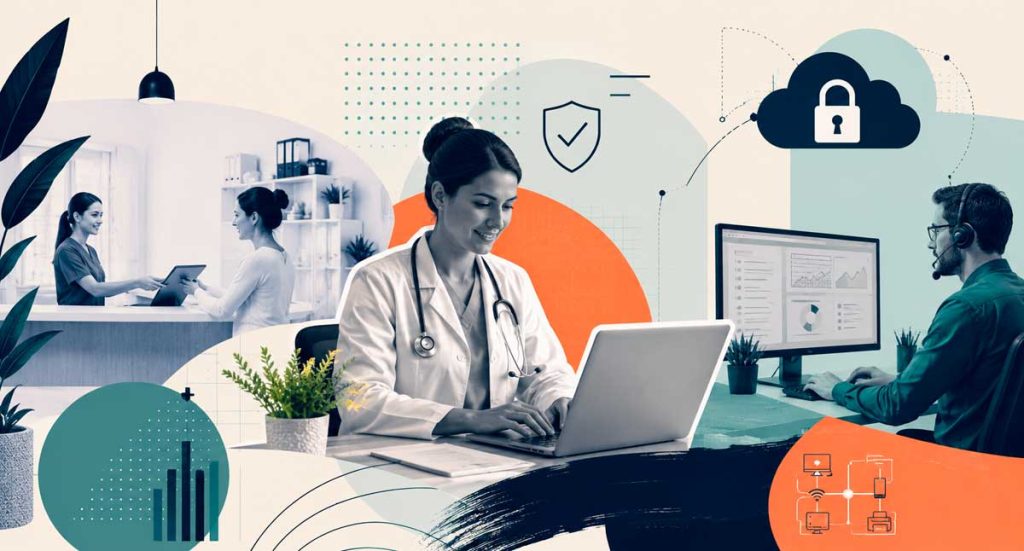
Technology has become indispensable for the operation of medical clinics. Currently, virtually every routine depends on systems, the internet, data storage, and digital communication. When a failure occurs, the impact can directly affect patient care, staff productivity, and the organization of the clinic. Therefore, IT outsourcing for clinics is growing more and more. In addition to reducing technical problems, this model allows for greater stability, security, and operational efficiency. Why is IT so important for medical clinics? Today, clinics use technology in virtually all their daily processes. Among these, we can highlight: In other words, when the infrastructure fails, the entire operation can be compromised. Furthermore, delays and instability directly impact patient experience and staff productivity. Main problems faced by clinics Many clinics still operate without specialized IT support. In many cases, technical assistance is only provided after a problem has already arisen. However, this model often generates several operational risks. Slow systems Slow computers and crashing systems reduce reception productivity and hinder customer service. Consequently, patient waiting times increase and the clinic’s routine becomes more stressful. Internet instability Currently, most medical systems rely on an internet connection. Therefore, connection outages can disrupt: Furthermore, a simple instability can cause delays throughout the workday. Backup failures Many companies believe they have secure backups. However, they only discover problems when they need to recover important files. This is an extremely dangerous risk for clinics and medical offices. Information security risks Clinics handle sensitive patient data daily. Therefore, any security breach can lead to financial losses and problems related to the LGPD (Brazilian General Data Protection Law). Furthermore, cyberattacks have increased in recent years, especially targeting companies that lack adequate protection. How does IT outsourcing work for clinics? IT outsourcing involves hiring a specialized company to manage all of the clinic’s technological infrastructure. In this way, the company takes care of: Meanwhile, the clinic is able to focus entirely on patient care. Benefits of IT outsourcing for clinics Greater operational stability A specialized team can identify flaws before they cause major impacts. Furthermore, continuous monitoring reduces downtime and increases system stability. Cost reduction Maintaining a full in-house IT team can lead to high costs associated with salaries, training, and tools. On the other hand, outsourcing allows access to specialized professionals without the need for large internal investments. Faster technical support When specialized support is available, problems are resolved much more quickly. Consequently, the clinic reduces downtime and avoids operational losses. Data security and compliance with the LGPD (Brazilian General Data Protection Law) Protecting medical information should be a priority in any healthcare institution. Therefore, specialized companies implement: Furthermore, these measures help the clinic comply with the requirements of the LGPD (Brazilian General Data Protection Law). Increased productivity for the team. When the infrastructure functions correctly, doctors, receptionists, and administrators can work more efficiently. In this way, the clinic gains productivity and improves the patient experience. When is the right time to outsource your clinic’s IT? Some signs indicate that the clinic already needs specialized support: In these situations, IT outsourcing can bring immediate gains in organization and stability. The importance of preventative IT in healthcare. Many companies still operate on the “if it breaks, call support” model. However, modern IT acts proactively. In other words, the goal is to identify problems before they affect the operation of the clinic. This is crucial in the healthcare field, where any unavailability can compromise patient care and internal processes. 📌 Read also: IT outsourcing in medical clinics improves security How to choose an IT company for clinics Before hiring a technology company, it’s important to evaluate a few points: Furthermore, choosing a reliable partner makes all the difference in maintaining the operational continuity of the clinic. Technology and customer service need to go hand in hand. Currently, clinics that invest in technological infrastructure are able to offer greater speed, security, and efficiency in their services. Therefore, IT outsourcing has ceased to be merely technical support and has become an important strategy for the growth of medical clinics. 📲 Does your clinic frequently experience IT problems? BHead IT Solutions offers specialized support, preventative monitoring, and IT solutions for companies and institutions that need greater stability, security, and productivity. 💬 Talk to our team via WhatsApp: (11) 4210-1774
IT outsourcing in associations: efficiency and security

Technology management in institutions increasingly demands structure, planning, and specialization. In this scenario, the IT outsourcing in associations It becomes a strategic alternative to ensure operational efficiency, information security, and service continuity. Unlike traditional companies, associations deal with budgetary constraints, high demand, and often critical operations, such as in the healthcare sector. Therefore, the way IT is managed directly impacts the functioning of the institution. The main challenges of IT outsourcing in associations. Associations face a number of specific challenges when it comes to technology. First and foremost, there is a strong reliance on systems for day-to-day operations. Electronic health records, administrative systems, and integrations are essential to keep the operation running. Furthermore, limited financial resources make it difficult to form a complete and specialized in-house team. As a result, many institutions end up operating with a reactive IT infrastructure. Another important point is the need for high availability. Systems cannot stop, as any downtime directly impacts customer service and internal processes. At the same time, information security becomes a constant concern. Sensitive data needs to be protected, especially in compliance with the LGPD (Brazilian General Data Protection Law). Therefore, the combination of these factors requires a well-structured IT system, which is not always possible internally. How does IT outsourcing play a role in this scenario? IT outsourcing allows organizations to have access to specialized technology management without having to maintain the entire infrastructure internally. In this model, a partner company assumes responsibility for IT maintenance, including monitoring, support, security, and infrastructure evolution. Furthermore, the action ceases to be merely corrective. With a preventive approach, problems are identified and resolved before they impact operations. In this way, the association gains more control, stability, and predictability in the technological environment. Benefits of IT outsourcing in associations By adopting outsourcing, associations begin to see significant improvements in their operations. Firstly, there is a considerable reduction in failures. With continuous monitoring, incidents are avoided or resolved more quickly. Furthermore, information security is strengthened. Appropriate policies and technologies help protect sensitive data and ensure compliance. Another important benefit is cost optimization. Instead of maintaining a complex internal structure, the institution gains access to a more efficient and specialized service. At the same time, the internal team can direct its efforts towards strategic activities of the institution itself. Finally, there is a gain in predictability. IT ceases to be a source of instability and begins to act as a support for growth. Real case: Associação Beneficente Nossa Senhora do Pari (HPARI) A practical example of the application of IT outsourcing in associations is the case of the Nossa Senhora do Pari Charitable Association (HPARI). The institution operates in the healthcare sector and has an operation that demands high availability, system integration, and reliable data management. As with many associations in this segment, the complexity of its IT is high. In this context, BHead began to provide complete support for the hospital’s technological infrastructure. The role involves continuous monitoring of the environment, server and network management, information security, and user support. In addition, there is ongoing work to improve and evolve the IT infrastructure. With this approach, HPARI achieved a more stable and secure operation. Failures were reduced, response time improved, and predictability increased. As a result, the institution was able to focus even more on its main objective: serving the population. 📌 READ ALSO: The 7 Biggest Benefits of IT Outsourcing for Associations The importance of preventative IT. One of the main advantages of outsourcing lies in the change of approach. Many associations still operate reactively, meaning they only act after problems have already occurred. However, this model generates instability and high costs. On the other hand, preventative IT allows you to anticipate failures and avoid interruptions. With monitoring and planning, operations become safer and more efficient. Furthermore, this approach brings more control to management and improves the overall performance of the institution. When to consider IT outsourcing Some signs indicate that the association could benefit from outsourcing. Frequent system crashes, slow performance, security flaws, and a lack of planning are clear signs that IT needs to evolve. Furthermore, when the internal team is overworked or lacks sufficient expertise, the outsourced model becomes a viable alternative. Another important factor is the growth of the institution. As operations increase, IT needs to keep pace. Therefore, evaluating these points helps to identify the right time to seek a specialized partner. Technology plays a fundamental role in supporting the operations of associations. When well-structured, it ensures efficiency, security, and continuity of services. If your institution is seeking greater stability, predictability, and security in its IT management, it’s worth rethinking the current model.📲 Talk to BHead by WhatsApp: (11) 4210-1774 and understand how we can help your operation evolve more efficiently and safely.
System crashes: how much does this cost your company?

Taking a few minutes to stop work might seem like a common occurrence in a company’s daily routine. However, when that pause is caused by a system outage, the impact goes far beyond a simple delay. Many companies still treat this type of problem as an isolated incident. However, in practice, recurring outages represent lost productivity, financial losses, and even operational risks. Therefore, understanding the true cost of these interruptions is essential for any manager. Why do system crashes happen? Before discussing losses, it’s important to understand the root of the problem. After all, systems don’t stop working by accident. In most cases, outages are related to failures in the IT infrastructure. Furthermore, a lack of monitoring and preventative maintenance directly contributes to this situation. Among the main reasons, we can highlight: In other words, it’s not a matter of bad luck. In fact, it’s a consequence of an IT department that isn’t prepared to support the operation. 📌 READ ALSO: BHead: who we are and how we help companies evolve with technology The invisible cost of bus stops. At first glance, a 10 or 15 minute stoppage may seem irrelevant. However, when we analyze the real impact, the scenario changes completely. When the system crashes, entire teams are brought to a standstill. Furthermore, even after the system is restored, there is a recovery period before everyone gets back into their normal rhythm. As a result, overall productivity is affected. At the same time, many ongoing activities may be lost. As a result, tasks need to be redone, which generates rework and increases the team’s effort. Furthermore, customer service is also directly impacted. If the system is down, response time increases and the customer experience is impaired. Consequently, this can lead to dissatisfaction and even lost opportunities. On the other hand, companies that rely on billing systems can suffer immediate losses. In other words, every minute of downtime can represent lost money. The cumulative effect over time Even a single fall can have an impact. However, the real problem lies in its recurrence. When these interruptions happen several times a month, the damage becomes significant. Furthermore, team burnout increases and the work environment becomes more stressful. Over time, the efficiency of the operation decreases. Therefore, what seemed like a small problem begins to affect the overall performance of the company. How to calculate the real impact on your company. Although many companies don’t do this calculation, it’s simpler than it seems. First, consider how many people are impacted by the outage, how long the system is unavailable, and the average hourly cost per employee. With this data, it’s already possible to have an initial estimate of the losses. Furthermore, it’s important to consider factors such as lost sales, rework, and impact on customer service. In this way, the manager begins to see IT as a strategic element, and not just as a cost. What can be done to prevent system crashes? The good news is that this type of problem can be avoided with proper planning. With continuous monitoring, for example, it is possible to identify failures before they cause an impact. Thus, the action ceases to be reactive and becomes preventive. Furthermore, investing in adequate infrastructure is fundamental. Systems need a solid foundation to function correctly, especially in high-demand environments. Another important point is the constant updating of systems. Outdated environments are more vulnerable and therefore more prone to failures. Similarly, information security should be treated as a priority. After all, attacks and security breaches can also cause downtime. Finally, capacity planning ensures that IT keeps pace with the company’s growth, preventing overloads and instability. The difference between solving and preventing Many companies still operate reactively, meaning they only address the problem after it has already occurred. On the other hand, companies that adopt a preventative approach are able to avoid most failures. Furthermore, they gain greater stability, predictability, and operational efficiency. Therefore, the difference lies not only in the technology used, but in how IT is managed. When to seek expert help In many cases, the internal team is unable to handle all the demands. This happens mainly due to a lack of time or specialization. In this scenario, having a specialized partner allows for continuous monitoring of the environment, rapid response to incidents, and better structuring of IT management. Furthermore, the company gains a more strategic view of technology, reducing errors and improving operational performance. If your company is already experiencing system outages or wants to avoid this type of problem, it’s worth rethinking how your IT is being managed. 📲 Talk to BHead on WhatsApp: (11) 4210-1774 and understand how we can help your operation achieve greater stability, security, and efficiency.
IT Outsourcing in Healthcare: Why Your Institution Needs It

Technology has become an essential pillar in the healthcare field. However, maintaining an efficient, secure, and 24/7 available IT infrastructure is a major challenge for hospitals, clinics, and laboratories. In this scenario, the IT outsourcing in healthcare It emerges as a strategic solution to guarantee performance, safety, and operational continuity. Throughout this article, you will understand how this model works, what its benefits are, and why more and more healthcare institutions are adopting this approach. What is IT outsourcing in healthcare? IT outsourcing in healthcare consists of outsourcing of information technology services For a specialized company. Instead of maintaining a complete in-house team, the institution relies on a strategic partner to manage, monitor, and evolve its entire technological infrastructure. Furthermore, this model allows access to specialized professionals, up-to-date technologies, and best market practices, without the need for high internal investments. Why is IT so critical in the healthcare sector? The healthcare sector has characteristics that make IT even more sensitive and strategic. First, systems need to be available at all times. Any downtime can directly impact patient care. Furthermore, there is a large volume of sensitive data that requires rigorous protection. Among the main critical points, we can highlight: Therefore, IT failures in this environment are not only operational, but can also jeopardize the reputation and even the safety of patients. Key IT challenges in healthcare institutions Even while acknowledging the importance of technology, many institutions face challenges in maintaining efficient IT infrastructure. Lack of specialized team Professionals with specialized knowledge in both healthcare and technology are hard to find. As a result, IT management ends up being limited. Outdated infrastructure Outdated systems and equipment hinder technological evolution and increase the risk of failures. High demand for availability Hospitals and clinics cannot shut down. However, maintaining systems active 24 hours a day requires constant infrastructure and monitoring. Security and compliance risks With the LGPD (Brazilian General Data Protection Law) in effect, protecting sensitive data has become an obligation. Even so, many institutions lack adequate processes. Benefits of IT outsourcing in healthcare Faced with these challenges, outsourcing presents itself as an efficient and strategic solution. Reduction of operational costs Instead of maintaining a full in-house team, the institution now relies on a specialized, on-demand service. This allows for better financial control. Access to experts With outsourcing, the company gains access to qualified professionals with experience in different scenarios and technologies. Continuous monitoring An outsourced IT company acts proactively, identifying and correcting problems before they impact operations. Enhanced information security Specialized companies adopt best practices and advanced technologies to protect sensitive data and ensure compliance with the LGPD (Brazilian General Data Protection Law). Focus on core business While IT is managed by specialists, the institution can focus on what really matters: patient care. 📌 READ ALSO: IT outsourcing for hospitals: 5 signs that your hospital needs this solution. How to implement IT outsourcing in healthcare. To achieve good results, it is essential to follow a structured process. Assessment of the current situation First of all, it’s necessary to understand the IT situation. This includes infrastructure, systems, security, and processes. Defining objectives Each institution has specific needs. Therefore, it is important to define clear goals, such as performance improvement, cost reduction, or increased security. Choosing the ideal partner Not every IT company has experience in the healthcare sector. That’s why choosing a partner with expertise in this segment makes all the difference. Implementation and monitoring After hiring, the process should be closely monitored. This ensures that the objectives are being met. The strategic role of IT in the evolution of healthcare. Technology is no longer just an operational support. On the contrary, it has become a strategic element for innovation and growth. With the advancement of solutions such as electronic health records, telemedicine, and data integration, IT has come to directly influence the quality of care and the efficiency of institutions. Therefore, investing in a well-structured IT system is investing in the organization’s future. Count on BHead to transform your institution’s IT. BHead acts as a strategic partner to healthcare institutions, offering complete IT outsourcing solutions, focusing on security, performance, and operational continuity. Our team is prepared to understand the needs of your environment and deliver a robust, efficient technological infrastructure ready to grow alongside your business. If you are looking for more efficiency, security and peace of mind in IT management, talk to BHead and find out how we can help.
How network outages directly impact business productivity.
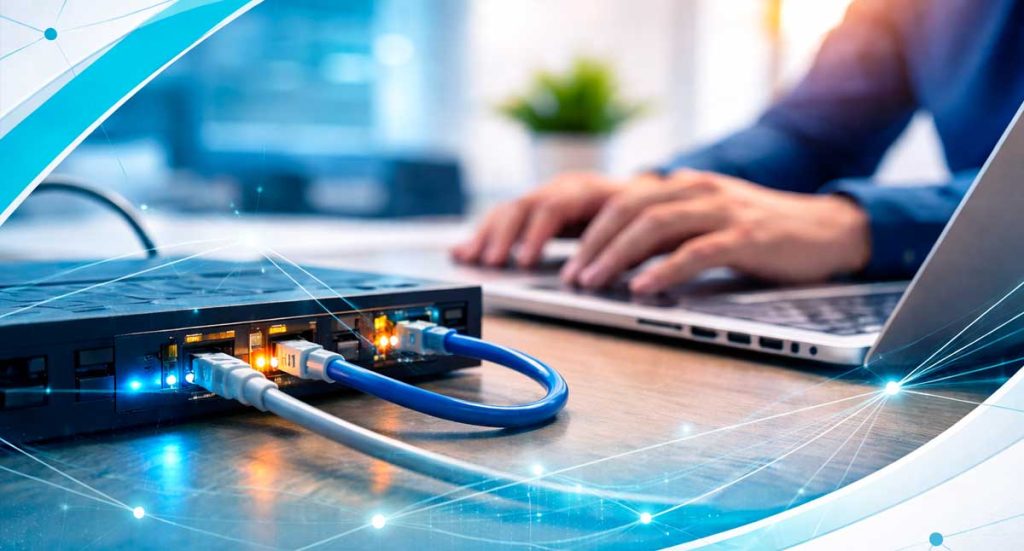
Network infrastructure is one of the cornerstones of any modern company’s operation. Currently, virtually all corporate processes depend on systems, digital communication, and constant access to data. However, many organizations still underestimate the impact that network failures can have on team productivity. When a corporate network experiences instability, even minor issues, the result is usually lost time, process delays, and employee frustration. Consequently, the company’s operational efficiency is directly affected. Why is the corporate network so important for businesses? Today, most business activities depend on connectivity. Management systems, communication platforms, cloud storage, and collaborative tools require constant and stable network access. Therefore, any interruption can generate chain reactions. For example, when the network becomes slow or unstable, simple tasks take much longer to complete. Furthermore, employees end up frequently interrupting their work to try and resolve technical problems. Over time, these small delays accumulate and have a significant impact on productivity. The main problems caused by network failures. Network failures can occur for various reasons, such as inadequate infrastructure, outdated equipment, or lack of continuous monitoring. Regardless of the cause, the effects tend to be similar. Among the most common problems are: Furthermore, when the network experiences frequent instability, IT departments end up spending a significant amount of time resolving emergency problems instead of working on structural improvements. 📌 READ ALSO:BHead: How computer network management impacts business performance. The impact of network outages on productivity. When network infrastructure is not properly planned, the company begins to face productivity losses that are often not immediately apparent. For example, imagine a team of ten employees who experience only five minutes of system slowdown throughout the day. While that may seem like a small amount, by the end of the week the lost time becomes significant. Furthermore, network problems can directly affect customer service, delay deliveries, and compromise the efficiency of internal processes. For this reason, many companies have come to see network infrastructure as a strategic factor in business performance. The importance of monitoring and managing network infrastructure. An efficient corporate network depends not only on modern equipment. In fact, it requires planning, constant monitoring, and proper management of the IT infrastructure. With proper monitoring, it’s possible to identify problems before they even impact users. This allows the IT team to act proactively, preventing interruptions and ensuring greater operational stability. Companies that have a structured technology management system, such as that offered by BHead IT Solutions They are able to reduce failures and keep their network environments running in a more stable and secure manner. Network infrastructure plays a fundamental role in business performance. When well-planned and monitored, it contributes to more efficient and productive operations. On the other hand, frequent failures can lead to delays, rework, and financial impacts. Therefore, investing in the proper management of the corporate network is no longer just a technical issue, but a strategic decision for companies that want to grow sustainably.
Healthcare IT Outsourcing in São Paulo: Efficiency and Security

The healthcare sector in São Paulo is evolving rapidly. Hospitals, clinics, and laboratories handle a massive amount of data and systems, requiring reliable technology and ongoing support.In this scenario, the IT outsourcing has become an efficient alternative to guarantee security, agility and cost reduction. Why are hospitals and clinics in São Paulo outsourcing IT? Maintaining an in-house IT infrastructure can be expensive and complex. Furthermore, the sector requires qualified professionals and high-performance equipment.For this reason, many institutions in São Paulo began to outsource IT for specialized companies. With this model, it is possible to: Furthermore, outsourcing allows managers to have more budgetary predictability and can invest in improvements to clinical infrastructure. +++ READ ALSO: IT Outsourcing for Hospitals: 5 Signs Your Hospital Needs This Solution Security and LGPD: a constant concern In the city of São Paulo, the volume of hospital data is enormous. Therefore, information security is a top priority.With the General Data Protection Law (LGPD), institutions need to adopt strict measures to protect sensitive patient information. By outsourcing IT, the hospital has constant monitoring, data encryption and controlled access policies.In addition, the partner company carries out automatic backups and regular security testing, ensuring that no data is lost or inappropriately exposed. Consequently, the risk of cyber incidents decreases and the institution’s reputation is preserved. How IT outsourcing works in practice The process is simple and adaptable. First, a IT infrastructure diagnosis of the hospital or clinic. The partner company then defines personalized action plans according to the size and needs of the institution. Among the most common services are: In this way, the hospital now hasa stable, secure and scalable technological environment, ready to accompany the growth of the operation. The health scenario in São Paulo Sao Paulo concentrates large medical centers and nationally renowned hospital networks.For this reason, investment in technology has become essential.However, keeping everything internally generates high costs and a constant demand for updates. In this context, outsourcing emerges as the ideal solution to ensure performance and continuous innovation, without overloading internal teams.Furthermore, it allows faster responses in critical situations, which is essential in hospital environments. BHead and the future of hospital IT in São Paulo A BHead Technologyacts in São Paulo and throughout the state, offering complete IT infrastructure and support solutions for hospitals, clinics and laboratories. With a specialized team and a focus on results, BHead delivers: Thus, healthcare institutions are able to operate with greater efficiency, stability and peace of mind, knowing that the technology is in good hands. Conclusion A IT outsourcing in healthcare in São Paulo is a smart choice for those looking efficiency, safety and economy.With the right partner, you can modernize processes, avoid failures, and protect critical information. 💡 Want to find out how much your clinic or hospital can save by outsourcing? 📞 Talk to BHead now on WhatsApp and receive a free assessment of your IT infrastructure.
IT Outsourcing in São Paulo: A Strategic Choice

A IT outsourcing in São Paulo has been growing rapidly among companies across various sectors. This is because São Paulo is one of the largest technology hubs in the country, bringing together qualified professionals and advanced solutions. Furthermore, by adopting this model, organizations can optimize processes and reduce costs without sacrificing service quality. In general, outsourcing offers access to up-to-date technologies, ongoing technical support, and greater agility in responding to internal demands. Consequently, the business gains more time to focus on its core business. Why choose IT outsourcing in São Paulo Opt for IT outsourcing in São Paulo guarantees significant competitive advantages. First, the city concentrates specialized suppliers, which makes it easier to find reliable and experienced partners. Furthermore, the cost-benefit is usually more attractive, as contracts are flexible and adaptable to each company’s size. Another important factor is the local technological infrastructure, which enables fast and efficient support. This reduces response times to resolve incidents, preventing operational losses. 💡 Read also:📌 7 Biggest Benefits of IT Outsourcing for Associations Direct benefits for companies in São Paulo Among the main benefits of IT outsourcing in São Paulo, the following stand out: Furthermore, this practice reduces the burden on internal staff, improves performance control, and increases operational reliability. How to choose the ideal partner in São Paulo Selecting the right supplier IT outsourcing in São Paulo is a crucial step. First and foremost, it’s crucial to check the company’s reputation and service history. It’s also worth evaluating the level of personalized services, as each business has specific needs. To ensure good results, choose companies that offer proactive monitoring, regular reporting, and 24-hour support. This way, outsourcing becomes truly strategic and sustainable in the long term. A smart investment for the future A IT outsourcing in São Paulo It’s more than a trend—it’s a smart decision for those seeking efficiency, security, and innovation. After all, in an increasingly digital market, relying on technology experts is the differentiator that drives growth and competitiveness. With the right partner, your company gains peace of mind, cost predictability, and ongoing support to tackle any technological challenge. 💡 Talk to BHead and transform your IT area If your company is in São Paulo and wants more efficiency, security and technological innovation,BHeadis the right partner to support this evolution.👉 Contact us now at WhatsApp da BHead and discover how our team can help transform your company’s IT management.
IT Outsourcing vs. In-House Staffing: Which is the Best Solution for Small Associations?

Many small associations face the challenge of choosing between outsourcing IT and hiring an in-house team . This decision directly impacts costs, information security, and the quality of support provided to the team. The question is common: should I invest in my own team or hire external specialists? In this article, we’ll clearly analyze the advantages and disadvantages of each model, highlighting which may be the most strategic solution for small associations. Advantages of IT outsourcing for small associations IT outsourcing offers flexibility and cost reduction, essential for organizations on a budget. It also provides access to specialized professionals without the need for direct employment relationships. The main benefits include: Therefore, for associations seeking efficiency with a lower initial investment, outsourcing tends to be a very attractive choice. Strengths of maintaining an in-house IT team On the other hand, an in-house IT team can offer significant advantages in situations that require proximity and immediate response. The main advantages include: However, it is important to highlight that maintaining your own team requires constant investment in salaries, training and tools. +++ READ ALSO: 5 IT Problems That Can Stop Your Business (And How to Avoid Them) +++ IT Outsourcing vs. In-House: Which Brings Better Results? When comparing IT outsourcing vs. in-house staffing , it’s clear that each model meets different needs. Smaller organizations looking to reduce costs and rely on ready-made specialists may benefit most from outsourcing. Those who deal with complex internal systems or who need comprehensive support on a day-to-day basis may consider an in-house team to be the most viable solution. How to decide the best path for your association When choosing between IT outsourcing vs. in-house staff , small associations should consider: Often, a hybrid model can also be an option: relying on a reduced team for internal demands and outsourcing more specialized activities. Conclusion The decision between IT outsourcing and in-house staffing should be strategic and aligned with the association’s goals. For most small organizations, outsourcing is the most cost-effective and efficient alternative, without sacrificing quality and security. In this scenario, relying on specialized partners makes all the difference. That’s why BHead offers comprehensive IT outsourcing solutions for small associations. With agile support, a focus on information security, and cost reduction, BHead helps your association gain efficiency. This way, your organization can direct more energy towards growth and delivering value to its members.
IT Outsourcing for Hospitals: 5 Signs Your Hospital Needs This Solution

Outsourcing IT for hospitals is an increasingly essential strategy for institutions seeking efficiency, security, and innovation. After all, maintaining efficient hospital operations goes far beyond providing good medical care. Technology is a fundamental part of ensuring agile, secure, and integrated processes. However, many hospitals still struggle to maintain an in-house IT team capable of meeting all demands. In this article, you’ll discover the 5 main signs that it’s time to outsource your hospital’s IT services. You’ll also understand how this decision can reduce costs, increase productivity, and improve the patient experience. 1. Lack of fast and efficient technical support If your team experiences frequent issues with slow systems, network failures, or unavailable electronic medical records, this is a clear warning sign. This is because the technological infrastructure is not being properly managed.By outsourcing IT services, your hospital can count on specialized support available 24/7. This way, critical systems continue to operate without interruptions, ensuring greater peace of mind for the entire team. 2. High costs with internal staff Maintaining an in-house IT department requires constant investments in salaries, training, certifications, and equipment updates. Therefore, for many hospitals, these costs become unsustainable in the long term.By hiring a specialized company, you reduce fixed expenses and transform IT into a strategic investment. This way, you only pay for the services you actually use, without compromising quality. +++ READ: IT Outsourcing: Reduce Costs by up to 40% +++ 3. Lack of technological updating If the hospital still uses outdated systems or obsolete equipment, the risks increase significantly. Furthermore, digital vulnerabilities are growing every day, potentially compromising the security of sensitive data. With outsourcing, specialized companies ensure constant updates and implement modern solutions. This way, the institution remains aligned with industry best practices, including advanced cyber protection. 4. Difficulty integrating systems When different areas of the hospital use platforms that don’t communicate with each other, rework, loss of information, and process failures occur. Consequently, patient care can be affected.By relying on a specialized partner, it becomes possible to integrate hospital management systems, laboratories, pharmacies, and the financial department. This makes the environment more agile, secure, and efficient. +++ READ: With TM Tecnologia, you expand the level of management in your laboratory +++ 5. Lack of focus on the main activity Hospital administration should prioritize patient care. However, when the management team has to deal with technical issues and operational failures, the focus shifts from what really matters.By outsourcing IT, management gains time and energy to focus on what’s essential: providing quality care and improving the patient experience. Advantages of IT outsourcing for hospitals Reduced operating costs. Conclusion If your hospital experiences one or more of these signs, it’s time to consider outsourcing IT services. With the help of a specialized team, your institution will have safer, more modern, and efficient operations. Furthermore, this choice ensures excellent service for patients and staff. Want to learn how BHead can help your hospital transform IT management? Contact our team and discover customized solutions for your institution.