
Two-factor authentication: how it enhances your company’s security
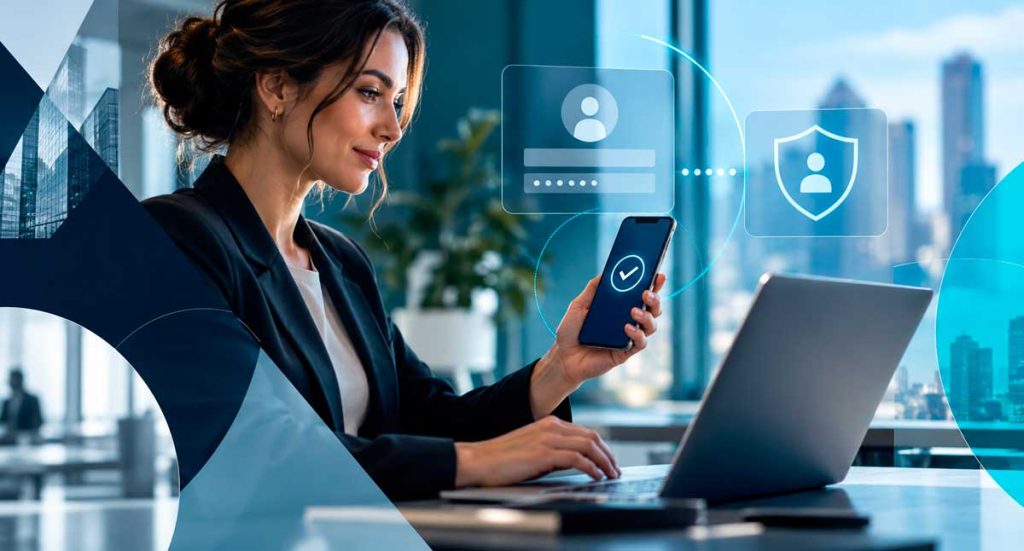
Digital security is no longer a concern exclusive to large companies. Today, businesses of all sizes use emails, corporate systems, cloud storage, financial platforms, social networks, and various other tools that store important information. Therefore, relying solely on a password is no longer enough. Even a strong password can end up exposed in a data breach, be reused on other services, or fall into the hands of criminals through phishing scams. In this scenario, two-factor authentication has become one of the most important measures to increase the protection of corporate accounts. What is two-factor authentication? Two-factor authentication, also known as 2FA, adds an extra step to the process of accessing an account. Instead of just providing a username and password, the user also needs to confirm their identity in a second way. This additional validation can occur through different methods, such as: In practice, this means that even if a criminal discovers a user’s password, they will still need to overcome a second layer of protection to access the account. Therefore, 2FA significantly reduces the risk of a compromised credential resulting in a breach. Why is a password alone no longer enough? Passwords remain important. However, criminals have various ways of obtaining them. One of the most common is phishing. In this type of scam, the criminal tricks the user into entering their credentials on a fake page that mimics a legitimate service. In addition, other risks can also compromise passwords, such as: When a company uses only a password as a security barrier, any of these situations can pave the way for unauthorized access. On the other hand, with two-factor authentication enabled, the password is no longer the only element required to access the account. How does two-factor authentication increase security? The main benefit of 2FA lies in the additional difficulty it creates for those attempting to access an account improperly. Imagine, for example, that an employee falls victim to a phishing scam and enters their password on a fake website. Without a second layer of authentication, the attacker can try to use those credentials immediately. With 2FA enabled, however, the system will also require additional confirmation. Therefore, even if the criminal has the password, they will still encounter another obstacle before they can access the account. This small change to the login process can prevent much bigger problems. Which company accounts should use 2FA? Whenever a platform offers two-factor authentication, it’s worth evaluating whether to activate it. Some accounts, however, should be given priority. Corporate emails Email is often one of the most important accounts within a company. In addition to centralizing business information, it also often allows for the recovery of passwords from other systems. Therefore, if a criminal manages to access an email account, they may try to compromise several other services. In this sense, protecting corporate email with a second authentication step is an essential measure. Microsoft 365 e Google Workspace Environments like Microsoft 365 and Google Workspace centralize emails, files, documents, calendars, and shared information. Consequently, an intrusion into these platforms can have significant impacts on the company. For this reason, the use of two-factor authentication in these environments should be part of security policies. Administrative and financial systems ERPs, financial systems, banking platforms, and management tools store sensitive information and often enable important operations. Therefore, these accounts require high levels of protection. Whenever the system offers support for the feature, the company should consider 2FA a priority. Corporate social networks Instagram, Facebook, LinkedIn, and other social media accounts also attract criminals. An intrusion can cause loss of access, publication of inappropriate content, and even scams against customers and followers. Furthermore, compromising these accounts could damage the company’s reputation. Therefore, it is also important to enable two-factor authentication on corporate social networks. Cloud storage services Cloud storage platforms can contain documents, contracts, shared files, and even backups. Therefore, protecting these accounts with additional authentication helps reduce the risk of unauthorized access to important information. SMS, authenticator app, or security key? There are different methods of two-factor authentication, and naturally, each offers a different level of protection. The code sent via SMS continues to be widely used and represents an important additional layer of protection compared to using only a password. However, authenticator apps often offer a more secure alternative, as they generate codes directly on the device and do not depend on the carrier’s network. In addition, companies can also use physical security keys for more critical accounts. These keys typically offer even greater protection and make particular sense for administrators, managers, and users with privileged access. Therefore, the ideal method depends on the structure, risk level, and needs of each company. Are 2FA and MFA the same thing? The concepts are similar, but there is a slight difference. 2FA stands for two-factor authentication and uses exactly two forms of confirmation. MFA, in turn, stands for multifactor authentication and can use two or more forms of validation. Despite this difference, both follow the same principle: requiring more than one piece of evidence to confirm the user’s identity. In practice, companies can use both concepts within their security strategies. Two-factor authentication (2FA) does not replace other security measures. Although two-factor authentication greatly increases account security, it should not be used in isolation. A good security strategy also needs to include other measures, such as: In addition, the company should periodically review its security settings. This is because new threats are constantly emerging, and at the same time, the internal structure is also changing with new hires, departures, new systems, and shifts in responsibility. Therefore, digital security should be treated as an ongoing process. 📌 READ ALSO: Why investing in digital security and antivirus software is essential for any company Special attention should be given to users with administrative privileges. Administrative accounts deserve an even higher level of protection. These users can change settings, create accounts, modify permissions, and access critical information. Consequently, a compromised administrative account can have a much greater impact than a
Why investing in digital security and antivirus software is essential for any company.
Digital security and antivirus software play a crucial role in protecting modern businesses. Given that cyberattacks are becoming increasingly sophisticated and frequent, while many organizations use basic protection tools, there is still a significant difference between “having an antivirus installed” and having a truly efficient infrastructure. Furthermore, cyberattacks are becoming increasingly sophisticated. Today, attackers use advanced methods such as targeted phishing, social engineering, hidden malware, and rapidly spreading ransomware. Therefore, adopting a more comprehensive approach that goes beyond the use of basic antivirus software is essential. How digital threats affect businesses First of all, it’s important to note that digital threats don’t discriminate based on company size. Small businesses are often prioritized targets precisely because they have fewer layers of protection. Therefore, a simple click on a fake link can have a significant impact on operations. Among the main risks are: This shows that protection goes far beyond simply avoiding viruses. It involves integrated strategies to ensure that the entire infrastructure is prepared to face increasingly frequent attacks. Why professional antivirus software makes a difference. Although there are several free options on the market, it’s crucial to understand that a professional antivirus offers advanced features that make all the difference in a corporate environment. In addition to detecting malware in real time, these solutions have additional layers of protection that prevent unauthorized access and monitor the behavior of suspicious programs. Consequently, the company gains more security, stability, and control over its digital assets.Another important point is that the professional versions allow you to manage all computers from a central panel, ensuring quick responses in case of incidents. Digital security beyond antivirus. Even with a good antivirus, it’s still necessary to strengthen the rest of the infrastructure. Therefore, it’s recommended to adopt complementary strategies, such as: When these solutions work together, the risk of incidents decreases significantly. Furthermore, the company gains greater predictability and peace of mind regarding its digital operations. The importance of safe behavior in everyday life. Despite all the tools available, employee behavior remains one of the most important lines of defense. Therefore, investing in awareness and best practices is essential.Ultimately, many attacks only happen because the attacker exploits human vulnerabilities, such as opening suspicious attachments, sharing passwords, or accessing untrusted websites. In this way, when the team understands the risks and learns to identify dangerous situations, the overall level of protection naturally increases. How can BHead help? BHead works with complete digital security solutions for companies that want robust, efficient, and modern protection. Our services range from initial consulting to the implementation of professional tools, ensuring that each environment is protected according to its specific needs. Whether through corporate antivirus software, advanced firewalls, or comprehensive monitoring strategies, we help your organization keep its data secure and its operations running smoothly and reliably. 📌 READ ALSO 💬 Contact us via WhatsApp Do you need to strengthen your company’s digital security? Talk to BHeadand receive expert guidance.
Corporate Technology Trends to Watch
The corporate technology landscape is constantly changing. Therefore, for companies that want to remain competitive and efficient, keeping up with the latest innovations is no longer an option—it’s become a necessity. With this in mind, BHead has prepared an analysis of the main corporate technology trends to keep an eye on. If your company is seeking modernization, reduced operational costs, and increased security, continue reading to the end. Each trend can directly impact the future of your business. Generative Artificial Intelligence in Customer Service and Support Generative AI has gone from being just a curiosity to becoming a strategic resource. Companies are currently using advanced chatbots to automate customer service, resolve technical issues, and even generate customized reports. Furthermore, AI helps increase the productivity of IT teams. As a result, it helps provide faster and more accurate responses to customers, thus improving the end-to-end experience. Broadcast-Quality Video Conferencing Infrastructure With hybrid work becoming more prevalent, many companies are investing in video conferencing rooms with professional broadcast technology. PTZ cameras, noise-canceling microphones, and integrated control panels make meetings clearer and more productive. In other words, more than simply connecting people, it’s important to ensure image and sound quality, especially in critical meetings with clients or partners. Therefore, investing in adequate infrastructure is essential. 📌 Read also: Link and Equipment Monitoring: Ensure the Stability of Your IT Infrastructure Cybersecurity with Zero Trust Access Digital security has never been more essential. The “Zero Trust” model has become standard in many companies. This means that no user or device is trusted by default, even within the corporate network. In other words, this approach protects against intrusions, data leaks, and unauthorized access, especially in environments with multiple devices and remote users. Important: This trend requires reviewing access policies and implementing strong authentication solutions. Otherwise, the company runs serious security risks. IT as a Service (ITaaS): Strategic Outsourcing Increasingly, companies are outsourcing their IT to specialized partners. This not only reduces costs with payroll, hardware upgrades, and ongoing training, but also ensures access to an experienced and constantly updated technical team. Furthermore, the ITaaS model allows internal IT to act more strategically, leaving operational routines in the hands of specialists. Consequently, managers can focus on innovation and results. ESG and Technology: Sustainable Innovation Companies are adopting technological practices aligned with ESG (environmental, social, and governance) pillars. This includes everything from reducing energy consumption in data centers to IT solutions focused on digital inclusion and accessibility. Therefore, technology and sustainability go hand in hand — and the market values companies that demonstrate this concern. After all, innovation also means considering long-term impact. Corporate technology trends for 2025 point to a scenario where automation, security, communication quality, and sustainability are essential. Therefore, companies that keep up with these changes don’t just stand out—they lead. If your organization wants to stay ahead of these transformations, talk to BHead. Our experts are ready to create the ideal solution for your business. 👉 Contact us via WhatsApp now!