
How IT Outsourcing Helps Hospitals Comply with LGPD
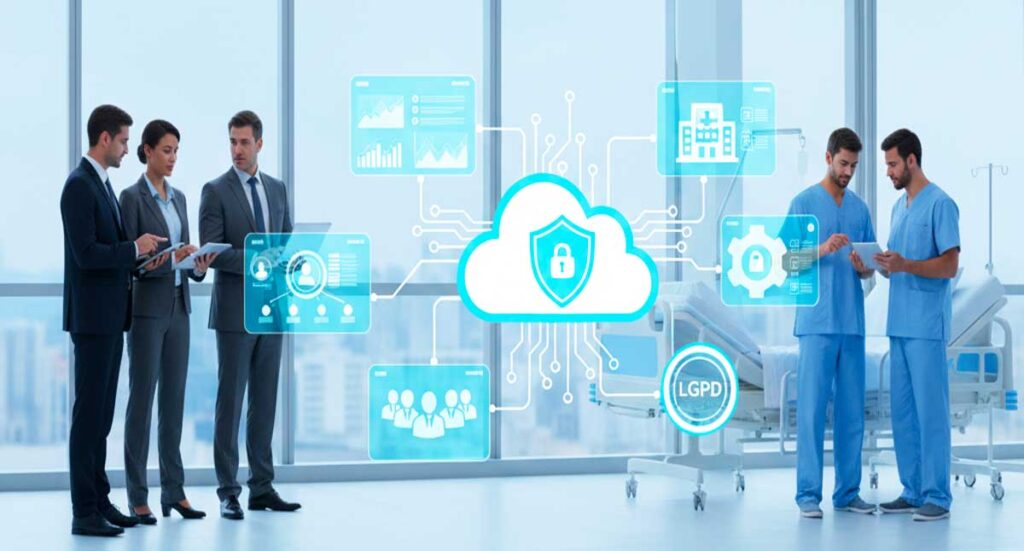
A IT outsourcing in hospitalshas gained ground in recent years. With the advancement of technology and the entry into force ofGeneral Data Protection Law (LGPD), healthcare institutions need to ensure that sensitive patient information is handled with maximum security. In this scenario, having specialized partnersis an efficient way to reduce risks, improve compliance and increase the confidence of patients and regulatory bodies. Why is LGPD so important for hospitals? Hospitals handle sensitive personal data daily, such as medical records, exams, and financial information. The LGPD mandates that this information must be protected against unauthorized access, leaks, or misuse. Therefore, any failure can result in hefty fines and jeopardize the institution’s reputation. Furthermore, the law requires that internal processes be documented and monitored. Therefore, maintaining skilled teams and up-to-date technological solutions is no longer a differentiator; it has become a legal obligation. How IT Outsourcing in Hospitals Strengthens Security A IT outsourcing in hospitalsallows that specialized professionalstake responsibility for implementing information security practices. This way, the healthcare institution can optimize costs while ensuring greater compliance with the LGPD. The main advantages include: Therefore, outsourcing not only strengthens technological infrastructure but also brings peace of mind to managers and healthcare professionals. +++ READ ALSO: IT Outsourcing for Hospitals: 5 Signs Your Hospital Needs This Solution +++ Strategic Benefits of IT Outsourcing for Hospitals: By choosing a reliable partner, hospitals can go beyond data protection. IT outsourcing also offers: Thus, the hospital not only complies with legislation, but also improves its operational performance. How to choose an IT partner to comply with LGPD Select the right companyis essential to guarantee results. Ideally, you should look for partners who have: This way, the hospital will be guaranteed that the data will be protected in accordance with the law. A IT outsourcing in hospitalsis an effective strategy for ensuring compliance with the LGPD. In addition to reducing the risk of fines and security breaches, it offers benefits such as cost optimization, improved quality of care, and increased patient confidence. Therefore, investing in this technological management model is an essential step for hospitals that wish to combine innovation, safety, and compliance with legislation.
IT Outsourcing vs. In-House Staffing: Which is the Best Solution for Small Associations?

Many small associations face the challenge of choosing between outsourcing IT and hiring an in-house team . This decision directly impacts costs, information security, and the quality of support provided to the team. The question is common: should I invest in my own team or hire external specialists? In this article, we’ll clearly analyze the advantages and disadvantages of each model, highlighting which may be the most strategic solution for small associations. Advantages of IT outsourcing for small associations IT outsourcing offers flexibility and cost reduction, essential for organizations on a budget. It also provides access to specialized professionals without the need for direct employment relationships. The main benefits include: Therefore, for associations seeking efficiency with a lower initial investment, outsourcing tends to be a very attractive choice. Strengths of maintaining an in-house IT team On the other hand, an in-house IT team can offer significant advantages in situations that require proximity and immediate response. The main advantages include: However, it is important to highlight that maintaining your own team requires constant investment in salaries, training and tools. +++ READ ALSO: 5 IT Problems That Can Stop Your Business (And How to Avoid Them) +++ IT Outsourcing vs. In-House: Which Brings Better Results? When comparing IT outsourcing vs. in-house staffing , it’s clear that each model meets different needs. Smaller organizations looking to reduce costs and rely on ready-made specialists may benefit most from outsourcing. Those who deal with complex internal systems or who need comprehensive support on a day-to-day basis may consider an in-house team to be the most viable solution. How to decide the best path for your association When choosing between IT outsourcing vs. in-house staff , small associations should consider: Often, a hybrid model can also be an option: relying on a reduced team for internal demands and outsourcing more specialized activities. Conclusion The decision between IT outsourcing and in-house staffing should be strategic and aligned with the association’s goals. For most small organizations, outsourcing is the most cost-effective and efficient alternative, without sacrificing quality and security. In this scenario, relying on specialized partners makes all the difference. That’s why BHead offers comprehensive IT outsourcing solutions for small associations. With agile support, a focus on information security, and cost reduction, BHead helps your association gain efficiency. This way, your organization can direct more energy towards growth and delivering value to its members.
IT Outsourcing for Hospitals: 5 Signs Your Hospital Needs This Solution

Outsourcing IT for hospitals is an increasingly essential strategy for institutions seeking efficiency, security, and innovation. After all, maintaining efficient hospital operations goes far beyond providing good medical care. Technology is a fundamental part of ensuring agile, secure, and integrated processes. However, many hospitals still struggle to maintain an in-house IT team capable of meeting all demands. In this article, you’ll discover the 5 main signs that it’s time to outsource your hospital’s IT services. You’ll also understand how this decision can reduce costs, increase productivity, and improve the patient experience. 1. Lack of fast and efficient technical support If your team experiences frequent issues with slow systems, network failures, or unavailable electronic medical records, this is a clear warning sign. This is because the technological infrastructure is not being properly managed.By outsourcing IT services, your hospital can count on specialized support available 24/7. This way, critical systems continue to operate without interruptions, ensuring greater peace of mind for the entire team. 2. High costs with internal staff Maintaining an in-house IT department requires constant investments in salaries, training, certifications, and equipment updates. Therefore, for many hospitals, these costs become unsustainable in the long term.By hiring a specialized company, you reduce fixed expenses and transform IT into a strategic investment. This way, you only pay for the services you actually use, without compromising quality. +++ READ: IT Outsourcing: Reduce Costs by up to 40% +++ 3. Lack of technological updating If the hospital still uses outdated systems or obsolete equipment, the risks increase significantly. Furthermore, digital vulnerabilities are growing every day, potentially compromising the security of sensitive data. With outsourcing, specialized companies ensure constant updates and implement modern solutions. This way, the institution remains aligned with industry best practices, including advanced cyber protection. 4. Difficulty integrating systems When different areas of the hospital use platforms that don’t communicate with each other, rework, loss of information, and process failures occur. Consequently, patient care can be affected.By relying on a specialized partner, it becomes possible to integrate hospital management systems, laboratories, pharmacies, and the financial department. This makes the environment more agile, secure, and efficient. +++ READ: With TM Tecnologia, you expand the level of management in your laboratory +++ 5. Lack of focus on the main activity Hospital administration should prioritize patient care. However, when the management team has to deal with technical issues and operational failures, the focus shifts from what really matters.By outsourcing IT, management gains time and energy to focus on what’s essential: providing quality care and improving the patient experience. Advantages of IT outsourcing for hospitals Reduced operating costs. Conclusion If your hospital experiences one or more of these signs, it’s time to consider outsourcing IT services. With the help of a specialized team, your institution will have safer, more modern, and efficient operations. Furthermore, this choice ensures excellent service for patients and staff. Want to learn how BHead can help your hospital transform IT management? Contact our team and discover customized solutions for your institution.
IT Outsourcing: Reduce Costs by Up to 40%
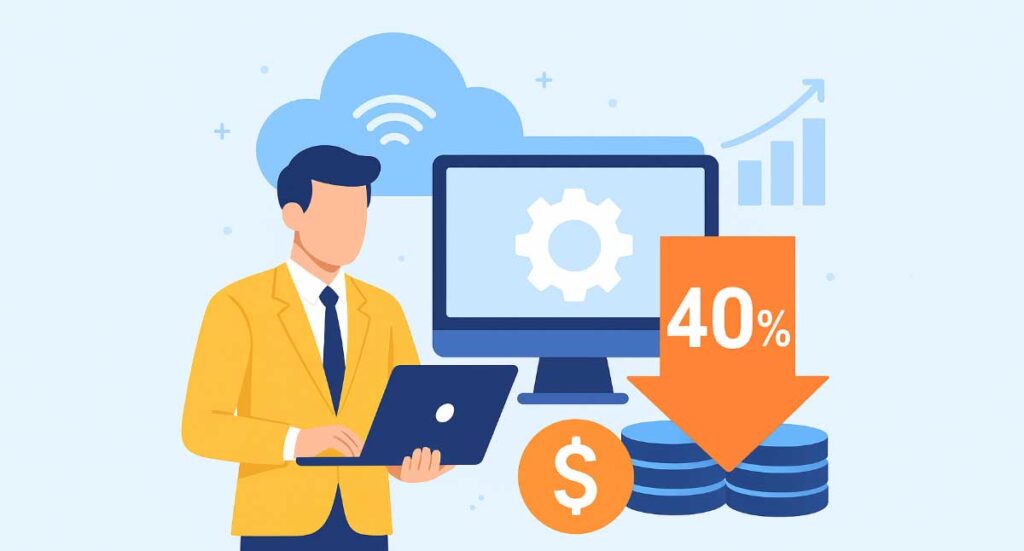
IT outsourcing is a strategy that allows companies to delegate part or all of their information technology management to a specialized partner. This practice, increasingly adopted by businesses of all sizes, helps reduce costs and ensure greater day-to-day efficiency. In this article, you’ll understand how IT outsourcing works, its main benefits, and how this solution can generate savings of up to 40% for your company. What is IT Outsourcing? IT outsourcing involves hiring a specialized company to handle services such as technical support, system maintenance, server management, information security, and other technology-related processes. This way, instead of maintaining a full in-house team, the organization now has access to qualified professionals on demand. This makes management more flexible and, consequently, more cost-effective. Main Benefits for Companies By opting for IT outsourcing, companies gain access to a range of advantages that go beyond cost reduction. The main benefits include: Savings of up to 40% on operational costs for staff and infrastructure. Access to qualified specialists without the costs of direct hiring. Greater information security, with constant monitoring. Continuous technological updates, without the need to invest in large equipment. Scalability, adjusting services according to business demands. Furthermore, this approach helps optimize internal processes, improves team productivity, and ensures that technology is always aligned with the company’s strategic objectives. ++ Read also: IT in healthcare with BHead ++ How IT outsourcing reduces costs Savings generated by IT outsourcing can reach 40% because fixed expenses for salaries, benefits, and infrastructure are replaced by leaner and more predictable investments. Furthermore, technical problems are resolved more quickly, which avoids losses from operational downtime and rework. This increases operational efficiency and makes better use of the company’s budget. Why Consider IT Outsourcing Now Companies across a variety of sectors—including hospitals, clinics, and associations—have already realized that IT outsourcing is not just a trend, but a necessity to remain competitive. By relying on a reliable partner, you can ensure quality technical support, keep systems up-to-date, and significantly reduce costs. Therefore, adopting this solution now can represent a strategic differentiator for the future of your business. In short, investing in IT outsourcing is a strategic decision that can transform your company’s operations. In addition to reducing expenses, this practice provides access to specialized professionals, improves data security, and allows greater focus on core business activities. If your company seeks efficiency and savings, now is the ideal time to evaluate this solution. Contact BHead and speak with a specialist to understand how IT outsourcing can benefit your business.
Corporate Technology Trends to Watch

The corporate technology landscape is constantly changing. Therefore, for companies that want to remain competitive and efficient, keeping up with the latest innovations is no longer an option—it’s become a necessity. With this in mind, BHead has prepared an analysis of the main corporate technology trends to keep an eye on. If your company is seeking modernization, reduced operational costs, and increased security, continue reading to the end. Each trend can directly impact the future of your business. Generative Artificial Intelligence in Customer Service and Support Generative AI has gone from being just a curiosity to becoming a strategic resource. Companies are currently using advanced chatbots to automate customer service, resolve technical issues, and even generate customized reports. Furthermore, AI helps increase the productivity of IT teams. As a result, it helps provide faster and more accurate responses to customers, thus improving the end-to-end experience. Broadcast-Quality Video Conferencing Infrastructure With hybrid work becoming more prevalent, many companies are investing in video conferencing rooms with professional broadcast technology. PTZ cameras, noise-canceling microphones, and integrated control panels make meetings clearer and more productive. In other words, more than simply connecting people, it’s important to ensure image and sound quality, especially in critical meetings with clients or partners. Therefore, investing in adequate infrastructure is essential. 📌 Read also: Link and Equipment Monitoring: Ensure the Stability of Your IT Infrastructure Cybersecurity with Zero Trust Access Digital security has never been more essential. The “Zero Trust” model has become standard in many companies. This means that no user or device is trusted by default, even within the corporate network. In other words, this approach protects against intrusions, data leaks, and unauthorized access, especially in environments with multiple devices and remote users. Important: This trend requires reviewing access policies and implementing strong authentication solutions. Otherwise, the company runs serious security risks. IT as a Service (ITaaS): Strategic Outsourcing Increasingly, companies are outsourcing their IT to specialized partners. This not only reduces costs with payroll, hardware upgrades, and ongoing training, but also ensures access to an experienced and constantly updated technical team. Furthermore, the ITaaS model allows internal IT to act more strategically, leaving operational routines in the hands of specialists. Consequently, managers can focus on innovation and results. ESG and Technology: Sustainable Innovation Companies are adopting technological practices aligned with ESG (environmental, social, and governance) pillars. This includes everything from reducing energy consumption in data centers to IT solutions focused on digital inclusion and accessibility. Therefore, technology and sustainability go hand in hand — and the market values companies that demonstrate this concern. After all, innovation also means considering long-term impact. Corporate technology trends for 2025 point to a scenario where automation, security, communication quality, and sustainability are essential. Therefore, companies that keep up with these changes don’t just stand out—they lead. If your organization wants to stay ahead of these transformations, talk to BHead. Our experts are ready to create the ideal solution for your business. 👉 Contact us via WhatsApp now!