IT Outsourcing vs. In-House Staffing: Which is the Best Solution for Small Associations?

Many small associations face the challenge of choosing between outsourcing IT and hiring an in-house team . This decision directly impacts costs, information security, and the quality of support provided to the team. The question is common: should I invest in my own team or hire external specialists? In this article, we’ll clearly analyze the advantages and disadvantages of each model, highlighting which may be the most strategic solution for small associations. Advantages of IT outsourcing for small associations IT outsourcing offers flexibility and cost reduction, essential for organizations on a budget. It also provides access to specialized professionals without the need for direct employment relationships. The main benefits include: Therefore, for associations seeking efficiency with a lower initial investment, outsourcing tends to be a very attractive choice. Strengths of maintaining an in-house IT team On the other hand, an in-house IT team can offer significant advantages in situations that require proximity and immediate response. The main advantages include: However, it is important to highlight that maintaining your own team requires constant investment in salaries, training and tools. +++ READ ALSO: 5 IT Problems That Can Stop Your Business (And How to Avoid Them) +++ IT Outsourcing vs. In-House: Which Brings Better Results? When comparing IT outsourcing vs. in-house staffing , it’s clear that each model meets different needs. Smaller organizations looking to reduce costs and rely on ready-made specialists may benefit most from outsourcing. Those who deal with complex internal systems or who need comprehensive support on a day-to-day basis may consider an in-house team to be the most viable solution. How to decide the best path for your association When choosing between IT outsourcing vs. in-house staff , small associations should consider: Often, a hybrid model can also be an option: relying on a reduced team for internal demands and outsourcing more specialized activities. Conclusion The decision between IT outsourcing and in-house staffing should be strategic and aligned with the association’s goals. For most small organizations, outsourcing is the most cost-effective and efficient alternative, without sacrificing quality and security. In this scenario, relying on specialized partners makes all the difference. That’s why BHead offers comprehensive IT outsourcing solutions for small associations. With agile support, a focus on information security, and cost reduction, BHead helps your association gain efficiency. This way, your organization can direct more energy towards growth and delivering value to its members.
IT Outsourcing for Hospitals: 5 Signs Your Hospital Needs This Solution

Outsourcing IT for hospitals is an increasingly essential strategy for institutions seeking efficiency, security, and innovation. After all, maintaining efficient hospital operations goes far beyond providing good medical care. Technology is a fundamental part of ensuring agile, secure, and integrated processes. However, many hospitals still struggle to maintain an in-house IT team capable of meeting all demands. In this article, you’ll discover the 5 main signs that it’s time to outsource your hospital’s IT services. You’ll also understand how this decision can reduce costs, increase productivity, and improve the patient experience. 1. Lack of fast and efficient technical support If your team experiences frequent issues with slow systems, network failures, or unavailable electronic medical records, this is a clear warning sign. This is because the technological infrastructure is not being properly managed.By outsourcing IT services, your hospital can count on specialized support available 24/7. This way, critical systems continue to operate without interruptions, ensuring greater peace of mind for the entire team. 2. High costs with internal staff Maintaining an in-house IT department requires constant investments in salaries, training, certifications, and equipment updates. Therefore, for many hospitals, these costs become unsustainable in the long term.By hiring a specialized company, you reduce fixed expenses and transform IT into a strategic investment. This way, you only pay for the services you actually use, without compromising quality. +++ READ: IT Outsourcing: Reduce Costs by up to 40% +++ 3. Lack of technological updating If the hospital still uses outdated systems or obsolete equipment, the risks increase significantly. Furthermore, digital vulnerabilities are growing every day, potentially compromising the security of sensitive data. With outsourcing, specialized companies ensure constant updates and implement modern solutions. This way, the institution remains aligned with industry best practices, including advanced cyber protection. 4. Difficulty integrating systems When different areas of the hospital use platforms that don’t communicate with each other, rework, loss of information, and process failures occur. Consequently, patient care can be affected.By relying on a specialized partner, it becomes possible to integrate hospital management systems, laboratories, pharmacies, and the financial department. This makes the environment more agile, secure, and efficient. +++ READ: With TM Tecnologia, you expand the level of management in your laboratory +++ 5. Lack of focus on the main activity Hospital administration should prioritize patient care. However, when the management team has to deal with technical issues and operational failures, the focus shifts from what really matters.By outsourcing IT, management gains time and energy to focus on what’s essential: providing quality care and improving the patient experience. Advantages of IT outsourcing for hospitals Reduced operating costs. Conclusion If your hospital experiences one or more of these signs, it’s time to consider outsourcing IT services. With the help of a specialized team, your institution will have safer, more modern, and efficient operations. Furthermore, this choice ensures excellent service for patients and staff. Want to learn how BHead can help your hospital transform IT management? Contact our team and discover customized solutions for your institution.
BHead at UniFi World Conference

On May 15th, the city of São Paulo hosted a major networking and connectivity event: the UniFi World Conference 2025.BHead attended this crucial industry event, reinforcing its commitment to innovation, technological advancements, and relationships with key market players. Opening with the Founder of Ubiquiti The conference began with a special presentation by Robert J. Pera, founder and CEO of Ubiquiti, the company responsible for the UniFi line.His participation highlighted the importance of the event and set the stage for a day full of news and insights into the future of connectivity. Innovations Presented Throughout the event, attendees learned about several cutting-edge technology solutions.Among the main highlights were: Wi-Fi 7: The next generation of wireless connectivity, offering faster speeds, lower latency, and greater capacity for simultaneously connected devices. UniFi Cloud Gateway: A modern network management solution that integrates control, security, and scalability into a single platform. UniFi Protect: Ubiquiti’s monitoring and security platform, known for its robustness and ease of use. These technologies were presented with practical demonstrations.This demonstrated how they can transform corporate environments and improve network performance. 📌 Read also: Artificial Intelligence in Computer Networks Networking and Sharing Experiences Besides the product launches, the event was also an excellent opportunity for networking.Professionals from all over Brazil, including systems integrators, distributors, and IT specialists, gathered to exchange experiences and discuss trends. BHead took advantage of the opportunity to strengthen ties with strategic partners.This connection reinforces our expertise in network solutions and IT infrastructure. Exhibition Area Another highlight of the event was the exhibition area.There, visitors were able to explore, test, and get up close and personal with Ubiquiti’s latest products.This hands-on experience complemented the technical content of the presentations and reinforced the brand’s commitment to continuous innovation. Commitment to Excellence Participating in the UniFi World Conference 2025 reinforces BHead’s positioning as a company connected to market transformations.We remain attentive to trends to always deliver the best in technology, connectivity, and infrastructure to our customers. For more information about UniFi/Ubiquiti products, contact us via WhatsApp.
Videoconferencing Transforming Corporate Service
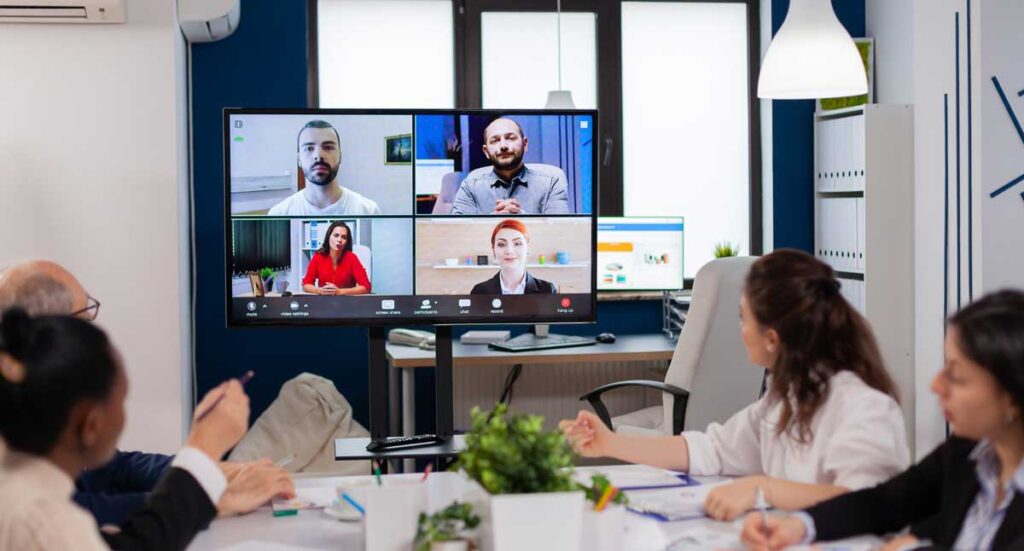
In an increasingly digital world, videoconferencing is no longer just an alternative. In fact, it has become a strategic necessity for companies that want to remain competitive. In Brazil, this transformation has been especially noticeable in organizations that value agility, quality service, and cost reduction—the cornerstones of the services offered by BHead. Why has videoconferencing become essential? With the rise of remote work and hybrid models, many companies have faced the challenge of keeping their teams connected efficiently. Therefore, videoconferencing has emerged as one of the most practical and comprehensive solutions. Among the main benefits of videoconferencing, we can highlight: Real-time communication with professional quality Reduced travel and logistics costs More objective and productive meetings Greater control and security in corporate interactions Furthermore, it has also proven effective in training, technical support, sales presentations, and customer support. In other words, it is a versatile tool that serves different areas of the company. Post-Implementation Video Conferencing Support: The BHead Difference Companies that adopt video conferencing systems often face problems shortly after installation. However, a lack of ongoing support can compromise the entire operation. This is precisely where BHead stands out in the market. Our support offers: Specialized technical support Preventive and corrective maintenance Personalized training for your company’s team Remote and in-person support, as needed This way, we ensure not only the technology’s functionality, but also its maximum efficiency. As a result, your company achieves better performance with much greater confidence. Technology that connects and generates results When choosing BHead, your company doesn’t just invest in modern equipment. In fact, it acquires complete solutions, developed by experts who understand the demands of the Brazilian corporate environment. Furthermore, our technical team is highly qualified to deliver customized video conferencing projects, with fast installation, a secure structure, and ongoing support. Read also: Technology Outsourcing for Healthcare and Other Sectors Want to transform your company’s communication? Contact BHead and see how video conferencing can become a strategic tool for your business. 👉 Talk to BHead now
Digital Transformation in Companies: How to Adapt.

Digital transformation has gone from being a trend to a necessity for companies that want to remain competitive in an increasingly dynamic market. In other words, it’s not just about adopting new technologies, but about changing the way an organization thinks, operates, and delivers value to customers. In this article, you’ll understand what digital transformation is, why it’s essential, and how to strategically initiate this process in your company. What is digital transformation? Digital transformation is the process of integrating digital technologies into all areas of a company. This profoundly changes the way it operates and generates value. More than just automating tasks, this process involves rethinking business models, organizational culture, customer service, and even the products and services offered. In short, it’s an ongoing journey of innovation and adaptation—not a project with an end date. Why does your company need to invest in this now? The pandemic has accelerated the digitalization of businesses at an unprecedented pace. Consequently, customers began to demand more agile, personalized, and remote experiences. Companies that failed to adapt to this new scenario lost ground to more agile and innovative competitors. See below some of the main reasons to adopt digital transformation: Increased operational efficiency Improved customer experience Medium- and long-term cost reduction Greater security and control over data More assertive decisions based on real data Increased competitiveness in increasingly digital markets Therefore, postponing this process can mean losing ground and relevance. How to begin digital transformation in practice? Many companies have doubts about how to take the first steps. However, the path can be simpler than it seems. See below: Map current processes: clearly understand how your company operates today. Listen to the customer: identify pain points, expectations, and opportunities for improvement. Set clear goals: know exactly what you want to transform with this process. Choose the right technologies: prioritize management, automation, and data analysis tools. Invest in training: the team needs to be prepared to use the new tools effectively. Rely on specialized partners: companies like BHead offer comprehensive support on this journey. In other words, the key is to align strategy, people, and technology. Is digital transformation for everyone? Yes, it is. Regardless of size or sector, every company can (and should) undergo a digital transformation. Even if resources are limited, it’s always possible to start with specific actions and gradually progress. Furthermore, the return is usually visible within the first few months of implementation. Therefore, the most important thing is to get started. How BHead Can Help BHead acts as a strategic partner in the digital transformation of companies, offering: Personalized consulting Implementation of IT solutions Ongoing technical support Integration of tools and platforms Team training and development So, more than just technology, we deliver results with purpose. 👉 Talk to BHead now Digital transformation is not a passing fad. On the contrary, it’s a change in mindset that impacts the entire structure of the company. Therefore, the sooner your company begins this journey, the greater its chances of standing out in the market. Now that you understand the importance of digital transformation, how about taking the next step? Visit the BHead blog and discover more content on innovation, technology, and productivity.
Smart office: understand the trend
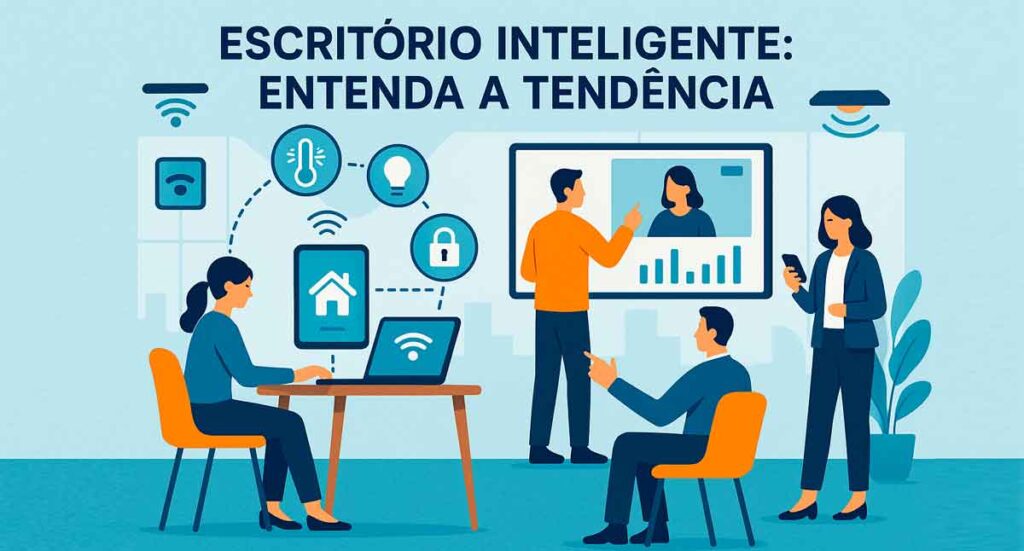
Offices are changing. And, contrary to what many people think, this change isn’t just aesthetic. With technological advancements, companies are transforming traditional spaces into smart offices, more efficient and adapted to the new reality of work. In this article, you’ll understand how this transformation is happening, why it’s important, and what your company can do to keep up with this evolution. What defines a smart office? Objectively, a smart office is a corporate environment that uses technology to facilitate tasks, improve the team experience, and reduce operating costs. In other words, everything is designed to function more efficiently. Furthermore, these environments offer greater comfort, security, and flexibility. This is possible because they rely on automation, smart sensors, video conferencing systems, and other interconnected solutions. 5 solutions that make the environment smarter Now that you understand the concept, let’s look at the resources behind this transformation. See below the main technologies used by companies adopting the smart office model. As a result, the environment adapts as needed, without waste. Remote communication is already part of the routine of many companies. However, not all offices are prepared for it. With modern video conferencing systems, meetings flow better and technical issues practically disappear. Consequently, productivity increases. Security has also evolved. Instead of badges or paper lists, many companies use biometrics, QR codes, or facial recognition. This ensures tighter control and fewer errors when accessing the building or specific rooms. Furthermore, the process is faster. Also read: Videoconferencing: Transforming Corporate Service Another important point is meeting rooms. They can be booked through apps, with control over features such as lighting, sound, and audiovisual equipment. This drastically reduces meeting preparation time. Finally, data analysis helps managers make more assertive decisions. Monitoring which spaces are most used, for example, allows for strategic layout reconfiguration. This way, the company optimizes the use of every square meter. Real Benefits of the Smart Office Now that you’ve seen the main solutions, it’s time to understand the results. Investing in technology for the corporate environment brings several benefits: Reduced energy, maintenance, and travel costs; Greater comfort and well-being for the team; A modern and updated corporate image; Safer and more organized environments. Furthermore, smart offices help attract talent, as they demonstrate that the company values innovation and quality of work life. Ready to transform your work environment? Implementing these technologies can seem complex. However, with the right partner, everything becomes easier. BHead specializes in corporate technology solutions, including video conferencing, automation, and IT infrastructure. Our team is ready to create a custom project for your company. 📲 Want to know how to transform your office? Contact BHead on WhatsApp:👉 Click here to chat with a specialist
IT Infrastructure: Common Mistakes

IT infrastructure is the backbone of any modern company. When well-structured, it ensures agility, security, and stability for all operations. However, many businesses still face bottlenecks and failures that compromise productivity—and, in some cases, even company growth. Therefore, we’ve compiled the 5 most common IT infrastructure mistakes you need to avoid to keep your company competitive and efficient. One of the most serious, yet quite common, mistakes is the lack of constant monitoring of IT assets and services. Without this monitoring, problems such as server outages, network slowdowns, or security breaches go unnoticed—until they have a real impact on operations. How to avoid: Fortunately, automated monitoring tools now exist that alert your team to any anomalies in real time. This way, you can take action before the problem becomes critical. Another common mistake is not performing adequate backups. Many companies only realize the importance of this practice when they’ve already lost valuable data. The loss can be caused by technical failures, cyberattacks, or even human error. What to do: To reduce risks, create an automatic backup routine. Additionally, store copies in separate locations—such as the cloud and on physical servers—and periodically test file integrity. Working with slow machines, old servers, or outdated networks is a major obstacle to productivity. Over time, equipment becomes less efficient, consumes more energy, and requires constant maintenance. Solution: Therefore, it’s essential to conduct periodic audits of IT assets. With this information in hand, you can create a technology renewal plan and prioritize the most critical areas. Also read: Structured Cabling: The Foundation for an Efficient Network Without standardization and documentation, every technical issue becomes a new headache. Furthermore, a lack of records hinders training, staff turnover, and increases incident resolution time. How to solve: To improve your infrastructure management, document processes, security policies, network configurations, and software used. This will give your team greater agility and control over the IT environment. Many companies choose to improvise when it comes to technical support. However, this choice can be costly. Unqualified professionals or inadequate response times put the entire operation at risk. Recommendation: In this case, the best alternative is to rely on a specialized company, such as BHead. We offer agile service, ongoing support, and customized solutions to ensure your IT infrastructure operates without interruptions. Conclusion Avoiding these errors in your IT infrastructure is not just a good practice—it’s a strategic step to ensure efficiency, security, and sustainable growth. With planning, adequate tools, and the right support, IT stops being a problem and becomes a competitive differentiator. Are you facing any of these issues? Talk to BHead and find out how we can transform your company’s IT.
IT Outsourcing: Reduce Costs by Up to 40%
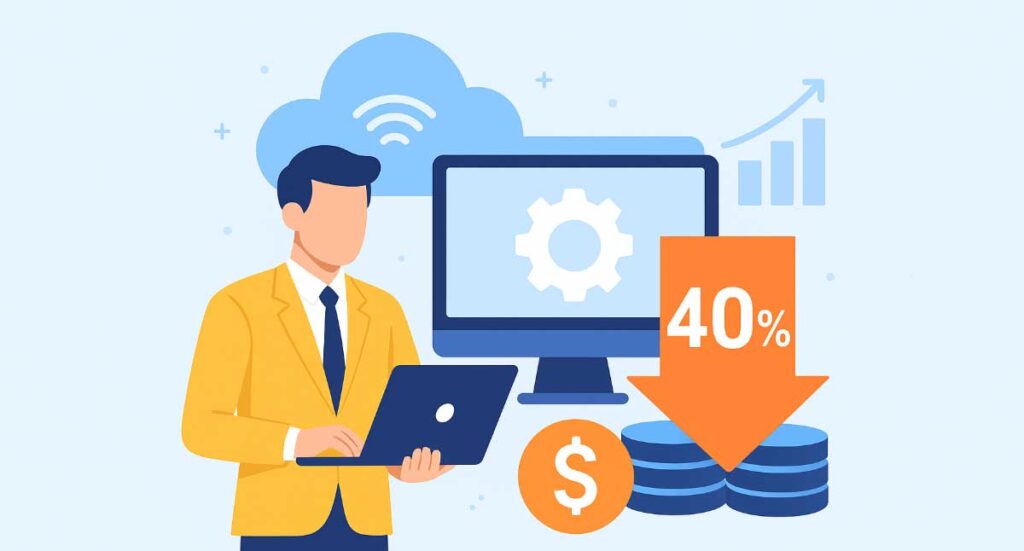
IT outsourcing is a strategy that allows companies to delegate part or all of their information technology management to a specialized partner. This practice, increasingly adopted by businesses of all sizes, helps reduce costs and ensure greater day-to-day efficiency. In this article, you’ll understand how IT outsourcing works, its main benefits, and how this solution can generate savings of up to 40% for your company. What is IT Outsourcing? IT outsourcing involves hiring a specialized company to handle services such as technical support, system maintenance, server management, information security, and other technology-related processes. This way, instead of maintaining a full in-house team, the organization now has access to qualified professionals on demand. This makes management more flexible and, consequently, more cost-effective. Main Benefits for Companies By opting for IT outsourcing, companies gain access to a range of advantages that go beyond cost reduction. The main benefits include: Savings of up to 40% on operational costs for staff and infrastructure. Access to qualified specialists without the costs of direct hiring. Greater information security, with constant monitoring. Continuous technological updates, without the need to invest in large equipment. Scalability, adjusting services according to business demands. Furthermore, this approach helps optimize internal processes, improves team productivity, and ensures that technology is always aligned with the company’s strategic objectives. ++ Read also: IT in healthcare with BHead ++ How IT outsourcing reduces costs Savings generated by IT outsourcing can reach 40% because fixed expenses for salaries, benefits, and infrastructure are replaced by leaner and more predictable investments. Furthermore, technical problems are resolved more quickly, which avoids losses from operational downtime and rework. This increases operational efficiency and makes better use of the company’s budget. Why Consider IT Outsourcing Now Companies across a variety of sectors—including hospitals, clinics, and associations—have already realized that IT outsourcing is not just a trend, but a necessity to remain competitive. By relying on a reliable partner, you can ensure quality technical support, keep systems up-to-date, and significantly reduce costs. Therefore, adopting this solution now can represent a strategic differentiator for the future of your business. In short, investing in IT outsourcing is a strategic decision that can transform your company’s operations. In addition to reducing expenses, this practice provides access to specialized professionals, improves data security, and allows greater focus on core business activities. If your company seeks efficiency and savings, now is the ideal time to evaluate this solution. Contact BHead and speak with a specialist to understand how IT outsourcing can benefit your business.
IT in healthcare with BHead

IT in healthcare is no longer just a support tool. Today, it plays a central role in the digital transformation of hospitals, clinics, and medical centers across the country. Behind more accurate diagnoses, faster care, and more efficient hospital management lies information technology. And it is precisely in this scenario that BHead stands out as a protagonist, operating with excellence in institutions of great social and medical importance. Technology and healthcare: a vital alliance In recent years, hospitals and healthcare institutions have faced increasingly complex challenges. For example, patient data security, clinical system integration, and operational workflow optimization. In this context, IT plays a decisive role. Furthermore, with the advancement of telemedicine, digitalization of medical records, and intelligent infrastructure management, it has become impossible to separate healthcare from technology. Fortunately, companies like BHead are leading this transformation with comprehensive solutions and high-quality service. BHead: Excellence in IT at CIES and the Nossa Senhora do Pari Charitable Association BHead is responsible for the entire IT infrastructure of the Center for Education and Health Integration (CIES) — a leading reference in integrated healthcare and humanized care in Brazil. Our services include: Ongoing technical support Network and server management Data security Monitoring of critical service systems Furthermore, the Nossa Senhora do Pari Charitable Association, which has provided essential services to the people of São Paulo for decades, also relies on BHead’s comprehensive technical support. This partnership ensures that administrative, medical, and care routines are supported by a secure, stable, and efficient technological structure. 📌 Read also: Outsourcing Technology for Healthcare and Other Sectors IT in Healthcare: Digital Transformation with Real Social Impact Much more than technology, BHead’s work represents results with purpose. Therefore, by supporting institutions with a strong social impact, such as CIES and the Nossa Senhora do Pari Association, BHead directly contributes to more accessible, safe, and modern healthcare. At the same time, this work generates positive impacts for both patients and healthcare professionals, who can rely on reliable systems and optimized processes. Why choose BHead for healthcare IT solutions? Healthcare IT requires agility, confidentiality, robustness, and, above all, trust. Therefore, BHead offers: Personalized service Experience with healthcare institutions Highly qualified technical team Agile and ongoing support Consequently, results become visible within the first few months of operation. If you are a healthcare institution manager looking for a reliable technology partner, contact BHead and discover how we can transform your environment with innovation, security, and high performance.
Corporate Technology Trends to Watch

The corporate technology landscape is constantly changing. Therefore, for companies that want to remain competitive and efficient, keeping up with the latest innovations is no longer an option—it’s become a necessity. With this in mind, BHead has prepared an analysis of the main corporate technology trends to keep an eye on. If your company is seeking modernization, reduced operational costs, and increased security, continue reading to the end. Each trend can directly impact the future of your business. Generative Artificial Intelligence in Customer Service and Support Generative AI has gone from being just a curiosity to becoming a strategic resource. Companies are currently using advanced chatbots to automate customer service, resolve technical issues, and even generate customized reports. Furthermore, AI helps increase the productivity of IT teams. As a result, it helps provide faster and more accurate responses to customers, thus improving the end-to-end experience. Broadcast-Quality Video Conferencing Infrastructure With hybrid work becoming more prevalent, many companies are investing in video conferencing rooms with professional broadcast technology. PTZ cameras, noise-canceling microphones, and integrated control panels make meetings clearer and more productive. In other words, more than simply connecting people, it’s important to ensure image and sound quality, especially in critical meetings with clients or partners. Therefore, investing in adequate infrastructure is essential. 📌 Read also: Link and Equipment Monitoring: Ensure the Stability of Your IT Infrastructure Cybersecurity with Zero Trust Access Digital security has never been more essential. The “Zero Trust” model has become standard in many companies. This means that no user or device is trusted by default, even within the corporate network. In other words, this approach protects against intrusions, data leaks, and unauthorized access, especially in environments with multiple devices and remote users. Important: This trend requires reviewing access policies and implementing strong authentication solutions. Otherwise, the company runs serious security risks. IT as a Service (ITaaS): Strategic Outsourcing Increasingly, companies are outsourcing their IT to specialized partners. This not only reduces costs with payroll, hardware upgrades, and ongoing training, but also ensures access to an experienced and constantly updated technical team. Furthermore, the ITaaS model allows internal IT to act more strategically, leaving operational routines in the hands of specialists. Consequently, managers can focus on innovation and results. ESG and Technology: Sustainable Innovation Companies are adopting technological practices aligned with ESG (environmental, social, and governance) pillars. This includes everything from reducing energy consumption in data centers to IT solutions focused on digital inclusion and accessibility. Therefore, technology and sustainability go hand in hand — and the market values companies that demonstrate this concern. After all, innovation also means considering long-term impact. Corporate technology trends for 2025 point to a scenario where automation, security, communication quality, and sustainability are essential. Therefore, companies that keep up with these changes don’t just stand out—they lead. If your organization wants to stay ahead of these transformations, talk to BHead. Our experts are ready to create the ideal solution for your business. 👉 Contact us via WhatsApp now!